What is honey processed coffee? What is honey processed coffee? Did you know
Did you know

What is honey processed coffee?

Will Sowerby

Written by Will Sowerby / Views

Published - 08 July 2026

Key takeaways

  • Honey processed coffee is dried with some of the cherry’s sticky fruit layer (called mucilage) left on the bean – no actual honey is involved.
  • The method sits between washed and natural processing, giving you extra sweetness and body while keeping a clean, balanced cup.
  • Honey processes are graded by colour – white, yellow, red, and black – based on how much mucilage stays on and how the coffee is dried.
  • The process uses far less water than washed processing, which matters in water-scarce growing regions.
  • It’s a high-skill, high-risk method – the grower has to monitor the drying beans constantly to stop them spoiling.

Here’s a surprise: honey processed coffee contains no honey at all. No bees, no hives, and nothing added to the beans.

The name comes from the sticky, golden coating left on the coffee while it dries – and the sweet, syrupy flavour it creates in your cup.

Honey process coffee sits somewhere between the two best-known processing methods, washed and natural.

It’s an increasingly popular method in speciality coffee, and once you’ve tasted a good one, you’ll understand why growers go to such lengths to get it right.

In this guide, we’ll explain what honey processed coffee is, how the honey process works step by step, what it means for flavour, and how it compares to other methods.

What is honey processed coffee?

Every coffee bean starts life as the seed of a coffee cherry. Between the cherry’s skin and the seed sits a layer of sticky, sugary pulp called mucilage.

How a grower deals with that layer after harvest is what we mean by ‘processing’ – and it shapes the taste of your coffee as much as the roast does.

Honey processed coffee is coffee where the grower removes the cherry’s skin, but leaves some or all of that mucilage clinging to the bean while it dries in the sun.

As the beans dry, the mucilage turns amber and sticky – like a honey glaze – and the sugars slowly soak into the bean.

The result is a cup with more sweetness and body than a washed coffee and more clarity and balance than a natural.

If washed coffee is crisp and clean, and natural coffee is big and fruity, honey processed coffee is the best of both worlds.

La Moneda Honey, a Pact limited edition Geisha

What is the honey process?

The honey process asks a lot of the grower. Every stage is a judgement call, and a few hours of inattention can ruin an entire lot. Here’s how it works.

Step one: picking and sorting

It starts, as all great coffee does, with ripe cherries. Growers pick only the ripest fruit – underripe cherries don’t have enough sugar in the mucilage to make the process worthwhile.

Step two: pulping

Within hours of picking, the cherries go through a pulping machine that strips away the outer skin. Unlike washed processing, the beans skip the fermentation tanks and washing channels entirely. The mucilage stays put.

Many growers use an adjustable machine called a demucilager to control exactly how much of that sticky layer remains – and that choice determines the style of honey process (more on colours below).

Step three: drying

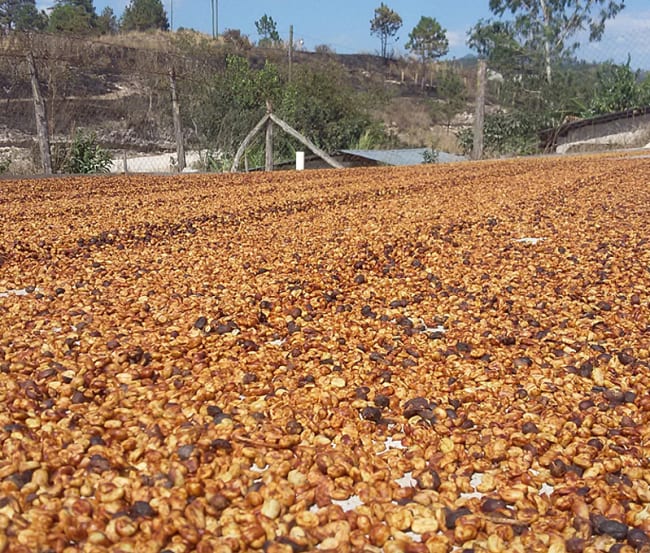
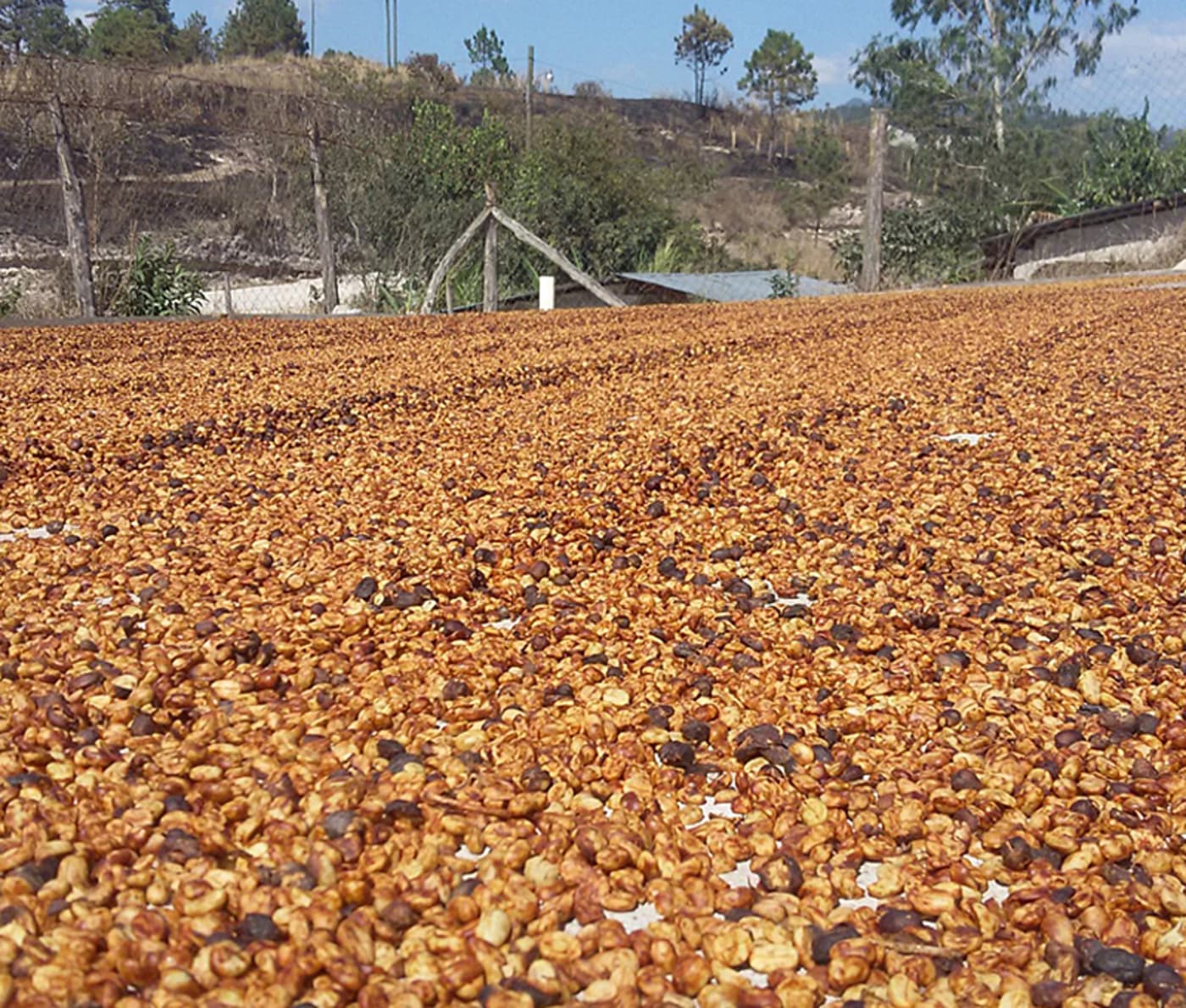
The beans are spread out on raised beds or patios to dry in the sun, usually for two to four weeks. This is where the skill comes in. The grower turns and rakes the sticky beans several times a day – sometimes every hour – to keep them drying evenly and to stop mould or over-fermentation taking hold.

All the while, the sugars in the mucilage develop and concentrate, feeding sweetness into the bean. Once the beans reach around 11% moisture, they’re rested, hulled, and prepared for export.

The honey colour grades

You’ll often see honey coffees labelled by colour. This refers to how the dried beans look, which depends on how much mucilage was left on and how quickly the coffee dried.

  • Yellow honey – most of the mucilage is removed and the beans dry quickly in full sun. This is the subtlest style, with gentle sweetness and lively acidity.
  • Red honey – more mucilage, slower drying, often with some shade. Expect deeper sweetness and a rounder body.
  • Black honey – nearly all the mucilage stays on, and drying is slow and carefully shaded. This is the boldest style, with an intense, jammy sweetness that flirts with natural-process territory.

There’s also white honey, where almost all the mucilage is removed – close to a washed coffee in the cup. As a rule of thumb: the darker the honey, the sweeter and heavier the coffee.

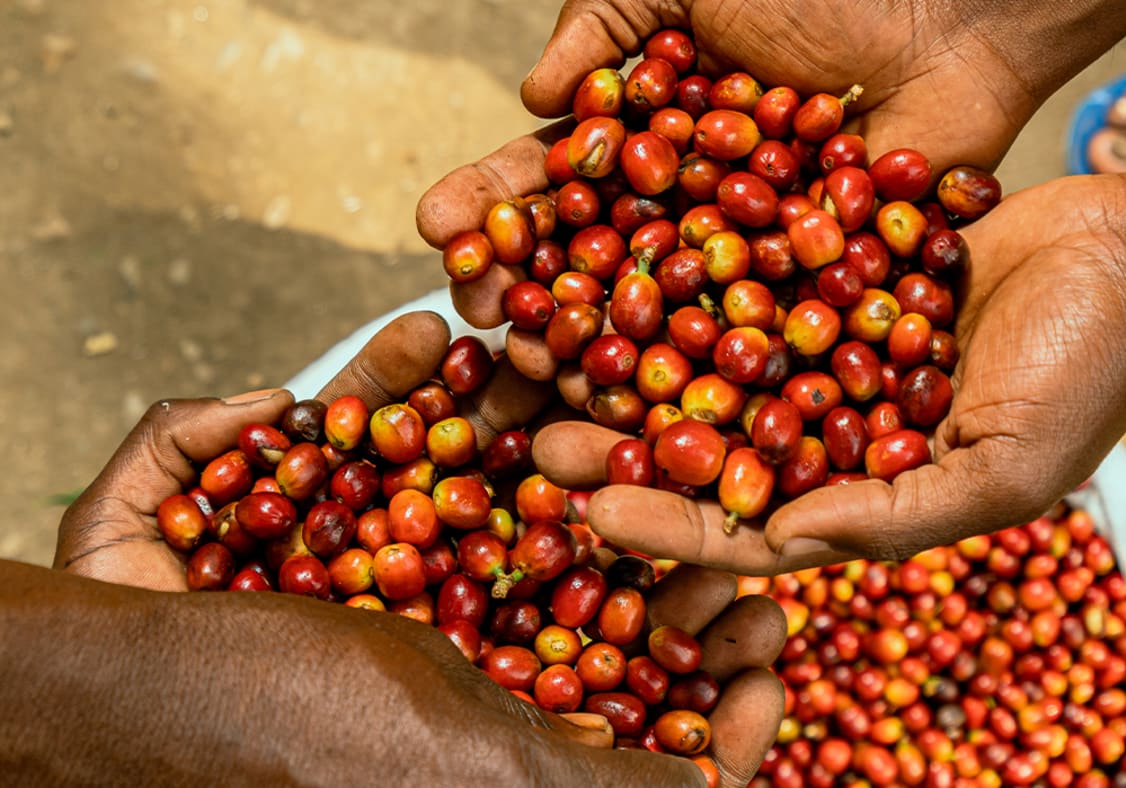
Ripe coffee cherries in Rwanda
quotes
"I love honey process. Honey process is very sweet, and you can taste your flavour profile very much. You can taste that lemongrass"
Jally Fabián Téllez, grower of honey Geisha on the La Moneda farm in Colombia.

What does honey processed coffee taste like?

A well-made honey processed coffee gives you:

  • Sweetness – think golden syrup, caramel, or brown sugar, courtesy of all those slow-dried fruit sugars.
  • Body – a rounder, more velvety mouthfeel than a washed coffee.
  • Softer acidity – brighter than a natural, gentler than a washed, and beautifully balanced.
  • Fruit notes – often stone fruit, red apple, or dried fruit, without the intensity naturals can have.

That balance makes honey coffees wonderfully versatile. They shine as a slow-brewed filter or cafetière coffee, where the sweetness has room to unfold – and darker honeys make a rich, syrupy espresso that stands up brilliantly to milk.

Honey vs washed vs natural: what’s the difference?

The three main processing methods are really three answers to one question: how much of the fruit stays on the bean while it dries?

  • Washed – the mucilage is washed off completely before drying. The result is clean and crisp with bright acidity. It uses the most water, but carries the least risk for the grower.
  • Honey – some or all of the mucilage stays on the bean while it dries. The result is sweet and balanced with a rounded body. It uses little water, but demands constant attention from the grower.
  • Natural – the entire cherry dries around the bean. The result is big, fruity, and wine-like. It uses hardly any water, but like honey processing, it’s high risk.

Neither method is ‘better’ – they’re different expressions of the same fruit. But if you find washed coffees a touch too delicate and naturals a touch too wild, honey processed coffee is likely to be your sweet spot.

Why do growers choose the honey process?

Given the risk and the round-the-clock effort, why bother? Three reasons.

First, flavour – and with it, price. A well-executed honey lot cups distinctively and commands a premium, rewarding the grower’s skill directly.

Second, water. Washed processing can use huge volumes of fresh water. The honey process needs only a fraction of it, which is why it was pioneered by growers in Costa Rica – where environmental regulation and water scarcity pushed producers to innovate in the late twentieth century and the early 2000s – and has since spread across Central and South America and beyond.

Third, craft. The honey process gives skilled growers more creative control over flavour than almost any other method. Choosing the mucilage level, the drying speed, and the turning schedule is how a great grower puts their signature on a coffee.

At Pact, that’s exactly the kind of expertise we look for.

FAQs

Does honey processed coffees contain honey?

No. The name only describes the honey-like look and stickiness of the mucilage-coated beans as they dry. Honey processed coffee is naturally vegan and contains nothing but coffee.

Does honey processed coffee taste like honey?

Sometimes, but not because honey is added. The slow-dried fruit sugars often create a syrupy, golden sweetness that people liken to honey – alongside notes like caramel, stone fruit, and brown sugar.

Is honey processed coffee sweeter than other coffee?

Generally, yes. Leaving the sugary mucilage on the bean during drying gives honey coffees a noticeably sweeter, rounder profile than washed coffees – though there’s no sugar in the finished beans, and no extra calories.

What’s the difference between yellow, red, and black honey coffee?

It comes down to how much mucilage stays on the bean and how slowly it dries. Yellow honey is the lightest and brightest, red honey is sweeter with more body, and black honey is the most intense and fruit-forward.

How should I brew honey processed coffee?

However you like – it’s a versatile style. A cafetière or filter brew shows off the sweetness and balance beautifully, while darker honey lots make an excellent, syrupy espresso.

Fancy tasting the honey process for yourself? Keep an eye on our latest single origin coffees – when a honey lot lands, it never hangs around for long.

Will Sowerby
Will Sowerby

Will Sowerby has worked in the coffee industry, at Pact, for five years. Prior to this, he spent four years as a writer in the wine industry. He is WSET qualified up to level three.

What is honey processed coffee?

Will Sowerby

Written by Will Sowerby

Views

Published - 08 July 2026

Key takeaways

  • Honey processed coffee is dried with some of the cherry’s sticky fruit layer (called mucilage) left on the bean – no actual honey is involved.
  • The method sits between washed and natural processing, giving you extra sweetness and body while keeping a clean, balanced cup.
  • Honey processes are graded by colour – white, yellow, red, and black – based on how much mucilage stays on and how the coffee is dried.
  • The process uses far less water than washed processing, which matters in water-scarce growing regions.
  • It’s a high-skill, high-risk method – the grower has to monitor the drying beans constantly to stop them spoiling.

Here’s a surprise: honey processed coffee contains no honey at all. No bees, no hives, and nothing added to the beans.

The name comes from the sticky, golden coating left on the coffee while it dries – and the sweet, syrupy flavour it creates in your cup.

Honey process coffee sits somewhere between the two best-known processing methods, washed and natural.

It’s an increasingly popular method in speciality coffee, and once you’ve tasted a good one, you’ll understand why growers go to such lengths to get it right.

In this guide, we’ll explain what honey processed coffee is, how the honey process works step by step, what it means for flavour, and how it compares to other methods.

What is honey processed coffee?

Every coffee bean starts life as the seed of a coffee cherry. Between the cherry’s skin and the seed sits a layer of sticky, sugary pulp called mucilage.

How a grower deals with that layer after harvest is what we mean by ‘processing’ – and it shapes the taste of your coffee as much as the roast does.

Honey processed coffee is coffee where the grower removes the cherry’s skin, but leaves some or all of that mucilage clinging to the bean while it dries in the sun.

As the beans dry, the mucilage turns amber and sticky – like a honey glaze – and the sugars slowly soak into the bean.

The result is a cup with more sweetness and body than a washed coffee and more clarity and balance than a natural.

If washed coffee is crisp and clean, and natural coffee is big and fruity, honey processed coffee is the best of both worlds.

La Moneda Honey, a Pact limited edition Geisha

What is the honey process?

The honey process asks a lot of the grower. Every stage is a judgement call, and a few hours of inattention can ruin an entire lot. Here’s how it works.

Step one: picking and sorting

It starts, as all great coffee does, with ripe cherries. Growers pick only the ripest fruit – underripe cherries don’t have enough sugar in the mucilage to make the process worthwhile.

Step two: pulping

Within hours of picking, the cherries go through a pulping machine that strips away the outer skin. Unlike washed processing, the beans skip the fermentation tanks and washing channels entirely. The mucilage stays put.

Many growers use an adjustable machine called a demucilager to control exactly how much of that sticky layer remains – and that choice determines the style of honey process (more on colours below).

Step three: drying

The beans are spread out on raised beds or patios to dry in the sun, usually for two to four weeks. This is where the skill comes in. The grower turns and rakes the sticky beans several times a day – sometimes every hour – to keep them drying evenly and to stop mould or over-fermentation taking hold.

All the while, the sugars in the mucilage develop and concentrate, feeding sweetness into the bean. Once the beans reach around 11% moisture, they’re rested, hulled, and prepared for export.

The honey colour grades

You’ll often see honey coffees labelled by colour. This refers to how the dried beans look, which depends on how much mucilage was left on and how quickly the coffee dried.

  • Yellow honey – most of the mucilage is removed and the beans dry quickly in full sun. This is the subtlest style, with gentle sweetness and lively acidity.
  • Red honey – more mucilage, slower drying, often with some shade. Expect deeper sweetness and a rounder body.
  • Black honey – nearly all the mucilage stays on, and drying is slow and carefully shaded. This is the boldest style, with an intense, jammy sweetness that flirts with natural-process territory.

There’s also white honey, where almost all the mucilage is removed – close to a washed coffee in the cup. As a rule of thumb: the darker the honey, the sweeter and heavier the coffee.

Ripe coffee cherries in Rwanda
quotes
"I love honey process. Honey process is very sweet, and you can taste your flavour profile very much. You can taste that lemongrass"
Jally Fabián Téllez, grower of honey Geisha on the La Moneda farm in Colombia.

What does honey processed coffee taste like?

A well-made honey processed coffee gives you:

  • Sweetness – think golden syrup, caramel, or brown sugar, courtesy of all those slow-dried fruit sugars.
  • Body – a rounder, more velvety mouthfeel than a washed coffee.
  • Softer acidity – brighter than a natural, gentler than a washed, and beautifully balanced.
  • Fruit notes – often stone fruit, red apple, or dried fruit, without the intensity naturals can have.

That balance makes honey coffees wonderfully versatile. They shine as a slow-brewed filter or cafetière coffee, where the sweetness has room to unfold – and darker honeys make a rich, syrupy espresso that stands up brilliantly to milk.

Honey vs washed vs natural: what’s the difference?

The three main processing methods are really three answers to one question: how much of the fruit stays on the bean while it dries?

  • Washed – the mucilage is washed off completely before drying. The result is clean and crisp with bright acidity. It uses the most water, but carries the least risk for the grower.
  • Honey – some or all of the mucilage stays on the bean while it dries. The result is sweet and balanced with a rounded body. It uses little water, but demands constant attention from the grower.
  • Natural – the entire cherry dries around the bean. The result is big, fruity, and wine-like. It uses hardly any water, but like honey processing, it’s high risk.

Neither method is ‘better’ – they’re different expressions of the same fruit. But if you find washed coffees a touch too delicate and naturals a touch too wild, honey processed coffee is likely to be your sweet spot.

Why do growers choose the honey process?

Given the risk and the round-the-clock effort, why bother? Three reasons.

First, flavour – and with it, price. A well-executed honey lot cups distinctively and commands a premium, rewarding the grower’s skill directly.

Second, water. Washed processing can use huge volumes of fresh water. The honey process needs only a fraction of it, which is why it was pioneered by growers in Costa Rica – where environmental regulation and water scarcity pushed producers to innovate in the late twentieth century and the early 2000s – and has since spread across Central and South America and beyond.

Third, craft. The honey process gives skilled growers more creative control over flavour than almost any other method. Choosing the mucilage level, the drying speed, and the turning schedule is how a great grower puts their signature on a coffee.

At Pact, that’s exactly the kind of expertise we look for.

FAQs

Does honey processed coffees contain honey?

No. The name only describes the honey-like look and stickiness of the mucilage-coated beans as they dry. Honey processed coffee is naturally vegan and contains nothing but coffee.

Does honey processed coffee taste like honey?

Sometimes, but not because honey is added. The slow-dried fruit sugars often create a syrupy, golden sweetness that people liken to honey – alongside notes like caramel, stone fruit, and brown sugar.

Is honey processed coffee sweeter than other coffee?

Generally, yes. Leaving the sugary mucilage on the bean during drying gives honey coffees a noticeably sweeter, rounder profile than washed coffees – though there’s no sugar in the finished beans, and no extra calories.

What’s the difference between yellow, red, and black honey coffee?

It comes down to how much mucilage stays on the bean and how slowly it dries. Yellow honey is the lightest and brightest, red honey is sweeter with more body, and black honey is the most intense and fruit-forward.

How should I brew honey processed coffee?

However you like – it’s a versatile style. A cafetière or filter brew shows off the sweetness and balance beautifully, while darker honey lots make an excellent, syrupy espresso.

Fancy tasting the honey process for yourself? Keep an eye on our latest single origin coffees – when a honey lot lands, it never hangs around for long.
Will Sowerby
Will Sowerby

Will Sowerby has worked in the coffee industry, at Pact, for five years. Prior to this, he spent four years as a writer in the wine industry. He is WSET qualified up to level three.