- The best ground coffee is freshly roasted, matched to your brewing method, and made from high-quality Arabica beans.
- Freshness matters more than almost anything else.
- Store ground coffee in an airtight container away from light, heat, and moisture.
- Find quality ground Pact coffee options at Waitrose and Ocado.
- For consistent quality, consider a ground coffee subscription from Pact Coffee.

Browse Categories


 Coffee break reading
Coffee break reading
What is the best ground coffee to buy?

Ground coffee is the most popular form of coffee in households (47%) outside of instant coffee, so it’s important to make sure it’s the best quality possible.
What is the best ground coffee?
Ground coffee is the most popular form of coffee in households (47%) outside of instant coffee, so it’s important to make sure it’s the best quality possible (Allegra ‘Coffee at Home Report’, 2025).
Simply put, the best ground coffee is coffee that was roasted recently, and ground to suit how you brew and what you enjoy drinking.
Within the first sip, you can usually tell.
Is it flat, or does it have clear flavours? Coffee is at its most expressive right after it’s been roasted and ground. From that moment on, its aroma starts to fade, oils oxidise, and complexity becomes dull.
Within a couple of weeks, you’ll notice:
- Less fragrance when you open the bag.
- A flatter tasting cup.
- Sweetness fading into something more muted.
With roasters like Pact Coffee, coffee is roasted in smaller batches, to order, and delivered within days of being ordered. So, it’s always carrying its very best flavours – just as the grower intended.
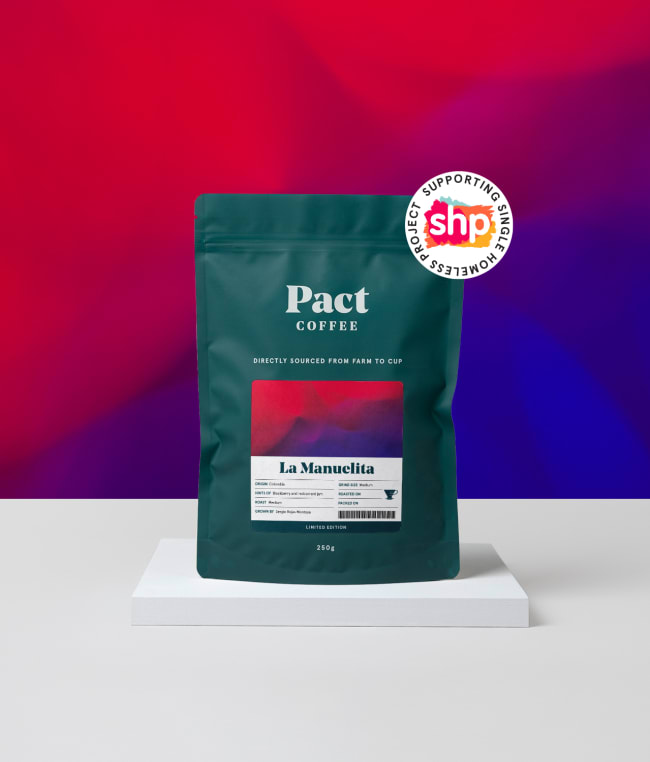
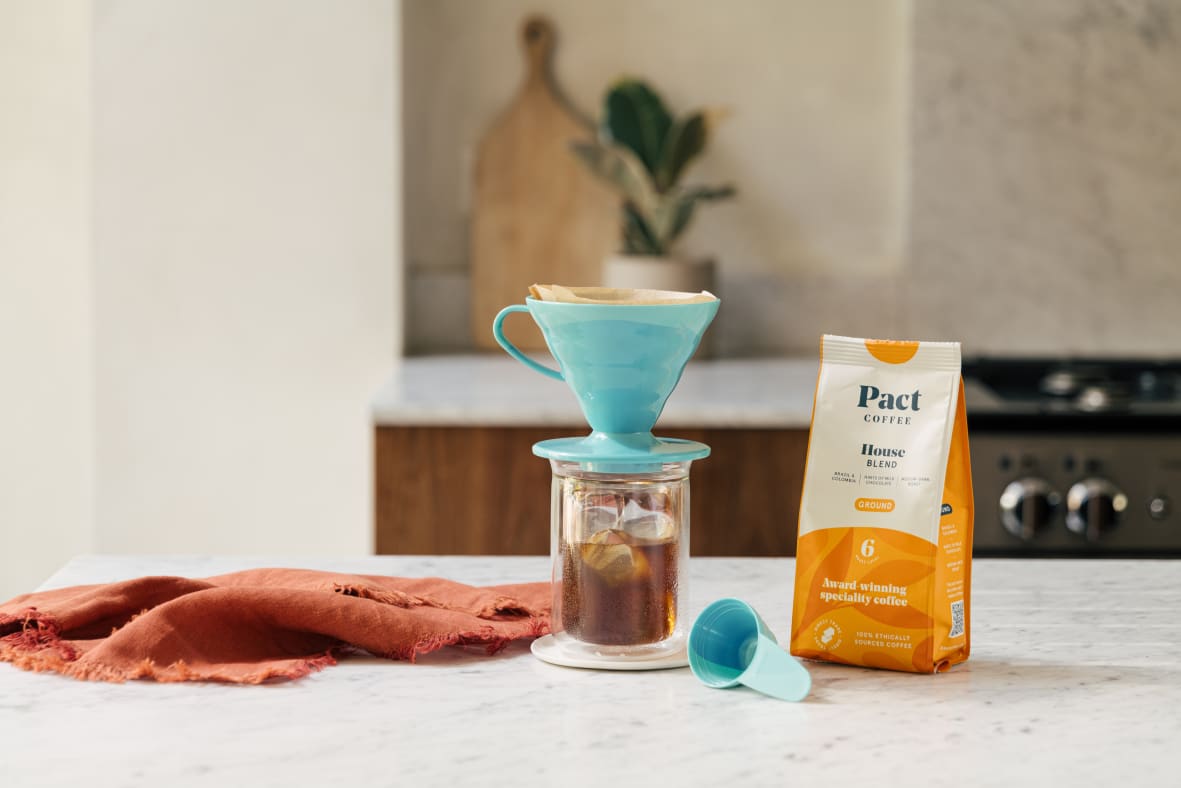
If you’re buying for convenience, you can find pre-ground Pact Coffee options like House Ground and Bourbon Cream Espresso Ground at retailers like Ocado and Waitrose.
Arabica vs Robusta: what’s actually better?
Most of the best ground coffee you’ll find is made from 100% Arabica beans. In a nutshell:
Arabica
Arabica beans are grown at higher altitudes, often in more challenging climates. That stress is part of what creates their more complex profiles.
You’ll typically taste:
- Layered sweetness
- Fruity, floral, or chocolatey notes
- A cleaner, more balanced finish.
- Higher acidity.
Robusta
Robusta beans are grown on more robust plants that are easier to grow. They can be grown at lower altitudes and typically contain a higher caffeine content. There is, however, a trade-off in flavour:
You can expect:
- Strong bitterness.
- Heavier, more rubbery, and earthy notes.
- Less clear flavours in the cup.
A 2024 comparative study of matched Arabica and Robusta lots found that Arabica got significantly higher overall sensory scores with most roast profiles. This only started disappearing at very dark roasts. So, while Robusta beans aren’t ‘bad’ – if your goal is to find the best ground coffee for flavour, Arabica is the clear winner.
How tasting notes vary
Tasting notes are shaped by a chain of conditions and decisions like altitude, soil, temperature, variety, processing, and roasting.
Each step leaves a mark on the final cup.
You might find a coffee that reminds you of:
- Soft stone fruit, like peach or apricot.
- Dark chocolate and toasted nuts.
- Citrus orange, grapefruit, or something bright and clean.
These aren’t artificial, added flavours. They’re completely natural and only get revealed through the way the coffee is grown and handled.
For example, a naturally processed Rwandan coffee might be:
- Bursting with blueberry sweetness.
- Light, almost tea-like.
- Floral and aromatic.
Whereas a washed coffee from Colombia could feel:
- Smooth and structured.
- Sweet like caramel.
- Slightly citrusy.
And a Brazilian coffee might lean towards:
- Nutty.
- Chocolatey sweet.
- Low in acidity.
This is largely where finding the best ground coffee becomes subjective. Because it becomes more about finding the flavours that you enjoy, rather than simply chasing labels and convenience.
Why grind size matters
Grind size controls how fast or slow water extracts flavour from ground coffee. Too fine or too coarse, and your cup will taste either too bitter or weak and dull.
That’s why it’s important to make sure your grind size is right for your chosen brewing method.
Best ground coffee for cafetière
- Grind: Coarse, like sea salt.
- Why it works: Slow extraction during immersion brewing.
- Result: More body and rounded sweetness.
Best ground coffee for espresso machine
- Grind: Fine, like sugar.
- Why it works: Builds pressure and resistance.
- Result: Intense, syrupy shot with crema.
Best ground coffee for filter
- Grind: Medium, like sand
- Why it works: Balanced flow rate.
- Result: Clean, expressive flavours.

Roasting is where the raw flavour inside the coffee bean is shaped and developed into something you can taste.
How roast level impacts ground coffee
Roasting is where the raw flavour inside the coffee bean is shaped and developed into something you can taste.
Light roast
Lighter roasts tend to hold onto the character of the origin it’s from:
- They can be bright, sometimes delicate and tea-like.
- You can expect flavours that are precise – like fruits and florals, with an acidity that lifts rather than overwhelms.
- Best for filter and pour-over.
Medium roast
Medium roasts move towards a more balanced cup, where sugars caramelise, and edges soften:
- You get a balance of sweetness, body, and a rounded acidity.
- Perfect if you want versatility, as they suit multiple brewing methods.
- Works with most brewing methods.
Dark roast
With darker roasts, flavours deepen – so you find something bolder and grounded:
- Deep, dark chocolate flavours, with a low acidity, heavy body, and more smoky notes.
- They can be especially comforting with milk.
- Best for espresso, milk-based drinks, and traditional coffee drinkers.
There isn’t an objective hierarchy in terms of roast levels. The best roast for ground coffee is always the one that brings you the flavours you enjoy drinking.
The best way to store ground coffee
Even the best ground coffee needs the right conditions to stay fresh. In order to store it correctly, you need to first understand the enemies of coffee:
- Oxygen strips away flavour and aroma through oxidation, leaving the coffee tasting flat and stale.
- Light breaks down delicate flavour compounds over time, fading the coffee’s character.
- Heat speeds up the ageing process, causing the coffee to lose its brightness and complexity more quickly.
- Moisture draws out flavour prematurely and dulls the cup, often leaving it tasting muddy or lifeless.
So, the best way to store coffee is:
- In an airtight container.
- Somewhere cool and dark.
The fridge can seem like a good idea, but it usually brings moisture with it. So, it’s best to avoid storing coffee there.
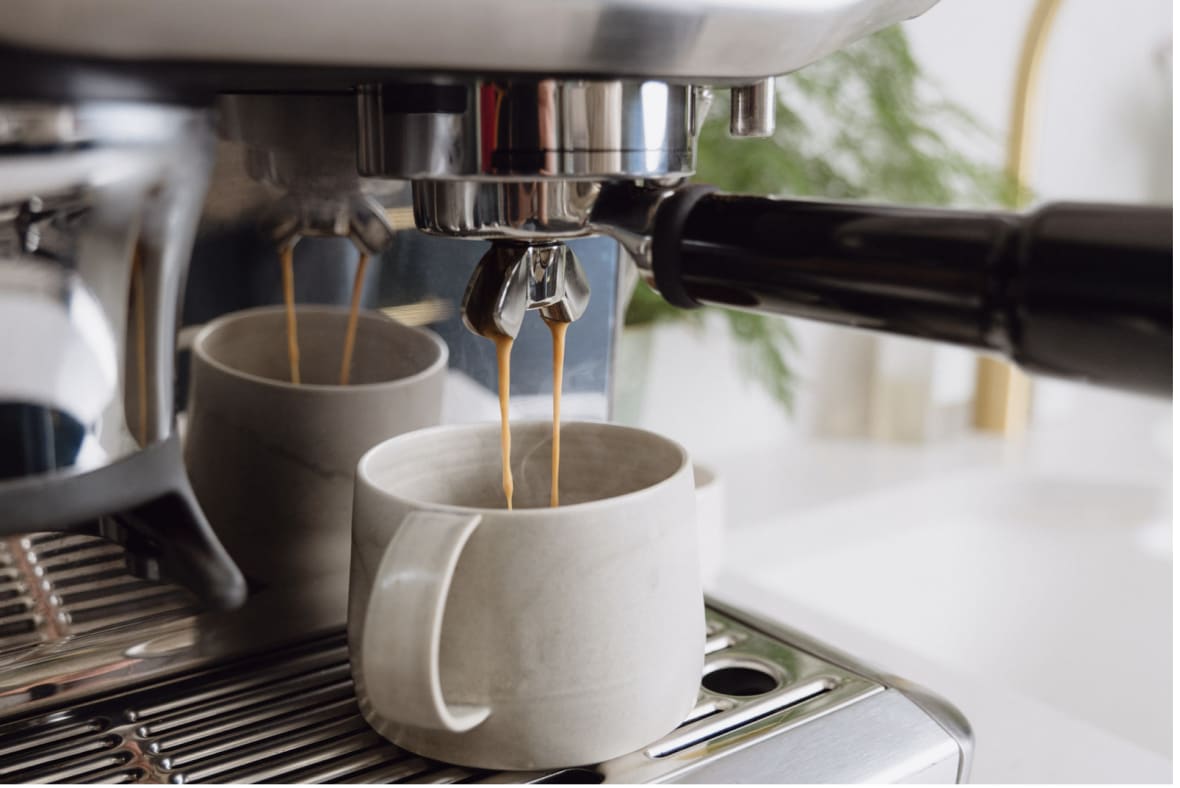
Different brewing methods can bring out different sides of the same coffee.
How to choose the best brew method for your ground coffee
Different brewing methods can bring out different sides of the same coffee. Here’s what we recommend…
Cafetière (French press) – best with coarse grind
- Immersion brewing.
- Fuller body, more texture.
- Works beautifully with chocolatey, nutty coffees.
Espresso machine – best with fine grind
- High-pressure extraction.
- Concentrated flavour.
- Ideal for bold, balanced blends.
Pour-over/filter – best with medium grind
- Controlled, precise.
- Highlights clarity and origin.
- Perfect for medium or lighter roasts.
AeroPress – best with medium-fine grind
- Versatile and forgiving.
- Can mimic espresso or filter.
- Great for experimentation.
You can see all our brewing guides here.
Where to buy the best ground coffee
Starting a subscription or buying directly from a roaster like Pact Coffee gives you:
- Roasted-to-order coffee.
- The grind tailored to your brewing method.
- More transparency on sourcing.
This way, your ground coffee tastes as fresh as it can be. If you’d like a Pact ground coffee subscription, you can start one here.
Frequently asked questions
What is the best ground coffee for cafetiere?
A coarse grind with a medium or dark roast is ideal. It allows for slower extraction and a fuller-bodied cup without bitterness.
What is the best ground coffee for espresso machine?
A fine grind is essential. Pair it with a medium to dark roast for balance, sweetness, and a good crema.
Is freshly roasted coffee really better?
Yes – freshly roasted coffee retains more aromatics and complexity, making a noticeable difference in taste.
How long does ground coffee stay fresh?
For the best flavour, use within 2-4 weeks of opening. After that, it gradually loses its vibrancy.
Should I buy ground coffee or whole beans?
Whole beans stay fresh longer, but high-quality, freshly ground coffee matched to your brewing method is a strong and convenient alternative.
Share this article
on social media
on social media
-

-

-

-

-
 Link Copied!


What is the best ground coffee to buy?
Share this article
on social media
on social media
-
-
-
-
-
Link Copied!
- The best ground coffee is freshly roasted, matched to your brewing method, and made from high-quality Arabica beans.
- Freshness matters more than almost anything else.
- Store ground coffee in an airtight container away from light, heat, and moisture.
- Find quality ground Pact coffee options at Waitrose and Ocado.
- For consistent quality, consider a ground coffee subscription from Pact Coffee.
Ground coffee is the most popular form of coffee in households (47%) outside of instant coffee, so it’s important to make sure it’s the best quality possible.
What is the best ground coffee?
Ground coffee is the most popular form of coffee in households (47%) outside of instant coffee, so it’s important to make sure it’s the best quality possible (Allegra ‘Coffee at Home Report’, 2025).
Simply put, the best ground coffee is coffee that was roasted recently, and ground to suit how you brew and what you enjoy drinking.
Within the first sip, you can usually tell.
Is it flat, or does it have clear flavours? Coffee is at its most expressive right after it’s been roasted and ground. From that moment on, its aroma starts to fade, oils oxidise, and complexity becomes dull.
Within a couple of weeks, you’ll notice:
- Less fragrance when you open the bag.
- A flatter tasting cup.
- Sweetness fading into something more muted.
With roasters like Pact Coffee, coffee is roasted in smaller batches, to order, and delivered within days of being ordered. So, it’s always carrying its very best flavours – just as the grower intended.
If you’re buying for convenience, you can find pre-ground Pact Coffee options like House Ground and Bourbon Cream Espresso Ground at retailers like Ocado and Waitrose.
Arabica vs Robusta: what’s actually better?
Most of the best ground coffee you’ll find is made from 100% Arabica beans. In a nutshell:
Arabica
Arabica beans are grown at higher altitudes, often in more challenging climates. That stress is part of what creates their more complex profiles.
You’ll typically taste:
- Layered sweetness
- Fruity, floral, or chocolatey notes
- A cleaner, more balanced finish.
- Higher acidity.
Robusta
Robusta beans are grown on more robust plants that are easier to grow. They can be grown at lower altitudes and typically contain a higher caffeine content. There is, however, a trade-off in flavour:
You can expect:
- Strong bitterness.
- Heavier, more rubbery, and earthy notes.
- Less clear flavours in the cup.
A 2024 comparative study of matched Arabica and Robusta lots found that Arabica got significantly higher overall sensory scores with most roast profiles. This only started disappearing at very dark roasts. So, while Robusta beans aren’t ‘bad’ – if your goal is to find the best ground coffee for flavour, Arabica is the clear winner.
How tasting notes vary
Tasting notes are shaped by a chain of conditions and decisions like altitude, soil, temperature, variety, processing, and roasting.
Each step leaves a mark on the final cup.
You might find a coffee that reminds you of:
- Soft stone fruit, like peach or apricot.
- Dark chocolate and toasted nuts.
- Citrus orange, grapefruit, or something bright and clean.
These aren’t artificial, added flavours. They’re completely natural and only get revealed through the way the coffee is grown and handled.
For example, a naturally processed Rwandan coffee might be:
- Bursting with blueberry sweetness.
- Light, almost tea-like.
- Floral and aromatic.
Whereas a washed coffee from Colombia could feel:
- Smooth and structured.
- Sweet like caramel.
- Slightly citrusy.
And a Brazilian coffee might lean towards:
- Nutty.
- Chocolatey sweet.
- Low in acidity.
This is largely where finding the best ground coffee becomes subjective. Because it becomes more about finding the flavours that you enjoy, rather than simply chasing labels and convenience.
Why grind size matters
Grind size controls how fast or slow water extracts flavour from ground coffee. Too fine or too coarse, and your cup will taste either too bitter or weak and dull.
That’s why it’s important to make sure your grind size is right for your chosen brewing method.
Best ground coffee for cafetière
- Grind: Coarse, like sea salt.
- Why it works: Slow extraction during immersion brewing.
- Result: More body and rounded sweetness.
Best ground coffee for espresso machine
- Grind: Fine, like sugar.
- Why it works: Builds pressure and resistance.
- Result: Intense, syrupy shot with crema.
Best ground coffee for filter
- Grind: Medium, like sand
- Why it works: Balanced flow rate.
- Result: Clean, expressive flavours.
Roasting is where the raw flavour inside the coffee bean is shaped and developed into something you can taste.
How roast level impacts ground coffee
Roasting is where the raw flavour inside the coffee bean is shaped and developed into something you can taste.
Light roast
Lighter roasts tend to hold onto the character of the origin it’s from:
- They can be bright, sometimes delicate and tea-like.
- You can expect flavours that are precise – like fruits and florals, with an acidity that lifts rather than overwhelms.
- Best for filter and pour-over.
Medium roast
Medium roasts move towards a more balanced cup, where sugars caramelise, and edges soften:
- You get a balance of sweetness, body, and a rounded acidity.
- Perfect if you want versatility, as they suit multiple brewing methods.
- Works with most brewing methods.
Dark roast
With darker roasts, flavours deepen – so you find something bolder and grounded:
- Deep, dark chocolate flavours, with a low acidity, heavy body, and more smoky notes.
- They can be especially comforting with milk.
- Best for espresso, milk-based drinks, and traditional coffee drinkers.
There isn’t an objective hierarchy in terms of roast levels. The best roast for ground coffee is always the one that brings you the flavours you enjoy drinking.
The best way to store ground coffee
Even the best ground coffee needs the right conditions to stay fresh. In order to store it correctly, you need to first understand the enemies of coffee:
- Oxygen strips away flavour and aroma through oxidation, leaving the coffee tasting flat and stale.
- Light breaks down delicate flavour compounds over time, fading the coffee’s character.
- Heat speeds up the ageing process, causing the coffee to lose its brightness and complexity more quickly.
- Moisture draws out flavour prematurely and dulls the cup, often leaving it tasting muddy or lifeless.
So, the best way to store coffee is:
- In an airtight container.
- Somewhere cool and dark.
The fridge can seem like a good idea, but it usually brings moisture with it. So, it’s best to avoid storing coffee there.
Different brewing methods can bring out different sides of the same coffee.
How to choose the best brew method for your ground coffee
Different brewing methods can bring out different sides of the same coffee. Here’s what we recommend…
Cafetière (French press) – best with coarse grind
- Immersion brewing.
- Fuller body, more texture.
- Works beautifully with chocolatey, nutty coffees.
Espresso machine – best with fine grind
- High-pressure extraction.
- Concentrated flavour.
- Ideal for bold, balanced blends.
Pour-over/filter – best with medium grind
- Controlled, precise.
- Highlights clarity and origin.
- Perfect for medium or lighter roasts.
AeroPress – best with medium-fine grind
- Versatile and forgiving.
- Can mimic espresso or filter.
- Great for experimentation.
You can see all our brewing guides here.
Where to buy the best ground coffee
Starting a subscription or buying directly from a roaster like Pact Coffee gives you:
- Roasted-to-order coffee.
- The grind tailored to your brewing method.
- More transparency on sourcing.
This way, your ground coffee tastes as fresh as it can be. If you’d like a Pact ground coffee subscription, you can start one here.
Frequently asked questions
What is the best ground coffee for cafetiere?
A coarse grind with a medium or dark roast is ideal. It allows for slower extraction and a fuller-bodied cup without bitterness.
What is the best ground coffee for espresso machine?
A fine grind is essential. Pair it with a medium to dark roast for balance, sweetness, and a good crema.
Is freshly roasted coffee really better?
Yes – freshly roasted coffee retains more aromatics and complexity, making a noticeable difference in taste.
How long does ground coffee stay fresh?
For the best flavour, use within 2-4 weeks of opening. After that, it gradually loses its vibrancy.
Should I buy ground coffee or whole beans?
Whole beans stay fresh longer, but high-quality, freshly ground coffee matched to your brewing method is a strong and convenient alternative.