Mastering AeroPress coffee: a guide to the world's most versatile brewer Mastering AeroPress coffee: a guide to the world's most versatile brewer How tos
How tos

Mastering AeroPress coffee: a guide to the world's most versatile brewer

Will

Written by Will / Views

Published - 29 May 2026

Key takeaways

  • The AeroPress combines full-immersion brewing with pressure and paper filtration, producing a clean, rich, sediment-free cup with almost no bitterness.
  • It’s practically indestructible, compact enough to fit in a backpack, and just as good on a camping trip as it is on a kitchen counter.
  • There are two methods: the standard upright method for a bright, clean cup, and the inverted method for a heavier body and more control over steeping time.
  • Medium-fine grind is the reliable starting point, though the AeroPress is unusually forgiving and rewards experimentation.
  • High-quality, freshly roasted speciality coffee makes a significant difference in what the AeroPress can produce. It’s a flavour magnifier as much as a brewer.

Most high-end coffee equipment follows a recognisable visual language. Gleaming steel espresso machines. Polished glass carafes. Ceramic pour-over cones that look as though they belong in a design museum. 

There’s an assumption, in the world of speciality coffee, that serious brewing requires serious-looking equipment.

The AeroPress arrived in 2005 and quietly ignored all of that.

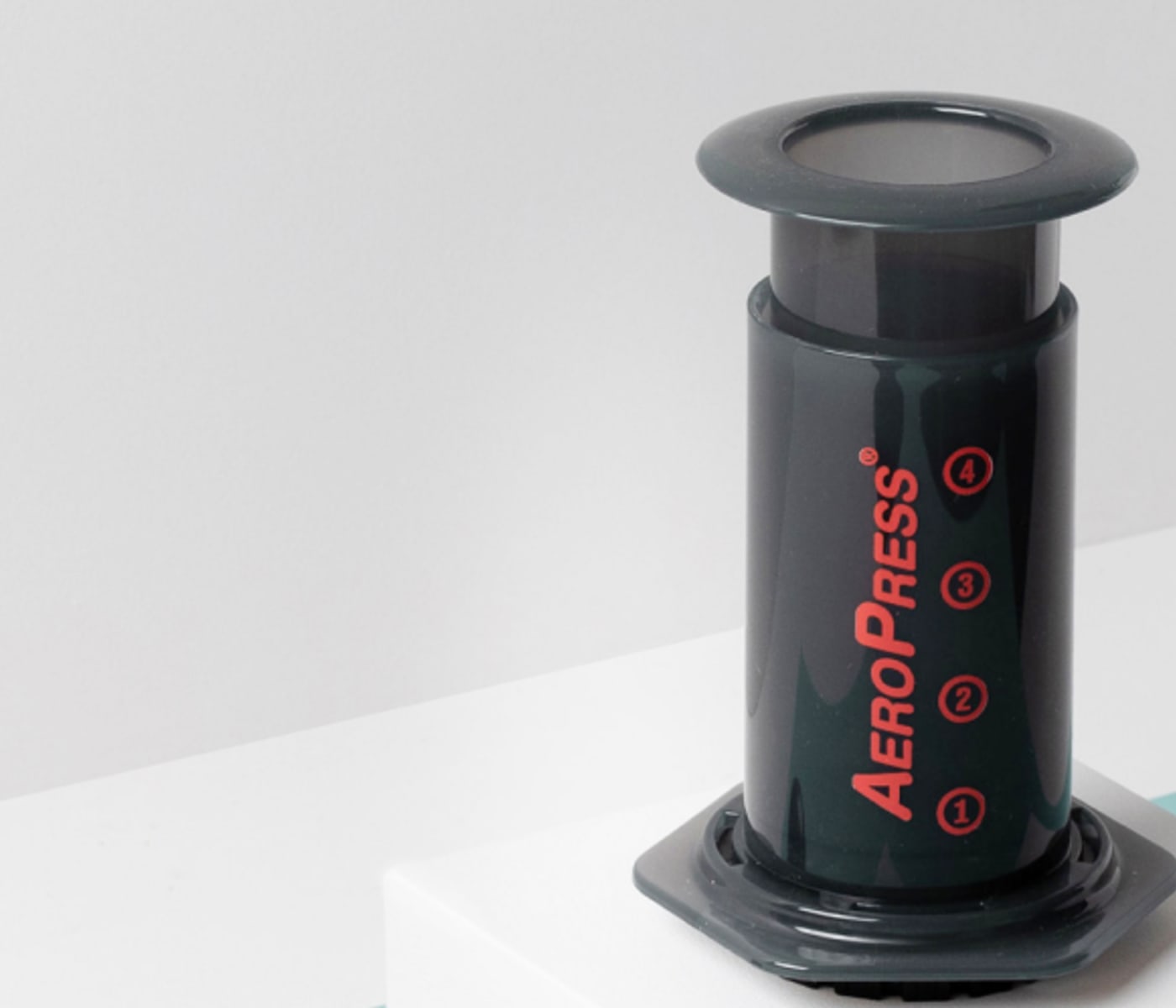
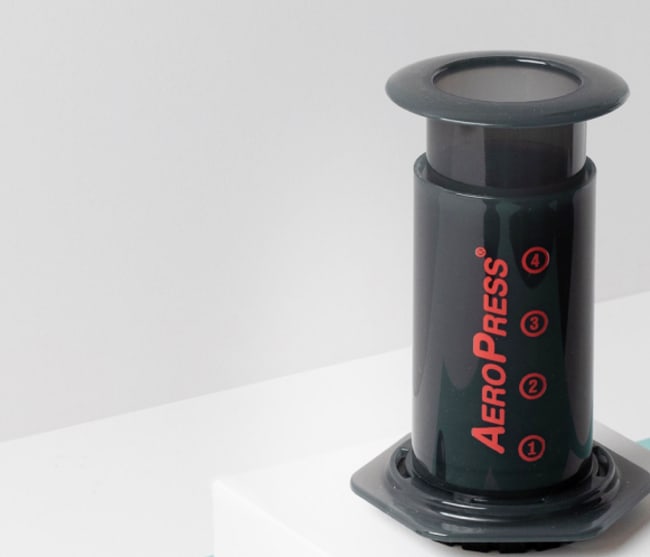
Made from heavy-duty, BPA-free plastic and shaped a little like a very large syringe, it looked nothing like the equipment it was about to outperform. 

But it did something that none of its more elegant competitors could quite manage: it gave everyday coffee drinkers genuine control over the three core elements of a good extraction (immersion, pressure, and filtration) in a single device that costs a fraction of what a decent espresso machine does, weighs almost nothing, and is virtually impossible to break.

It has since become one of the most beloved brewers in the speciality coffee world. This is a guide to understanding why, and to getting the most out of it.

Plunging the AeroPress

What is an AeroPress coffee maker?

The AeroPress has an unusual origin story, even by the standards of the coffee world. It wasn’t invented by a barista or a coffee company. It was designed by Alan Adler, a Stanford University engineering lecturer best known as the inventor of the Aerobie flying ring, which held the Guinness World Record for the longest thrown object.

Adler was frustrated by automatic drip machines, which he found consistently under-extracted coffee and produced bitter, uneven results. He set out to design a manual brewer that could make a single, exceptionally clean cup in under two minutes.

The result is a three-part system: a brewing chamber, an airtight silicone-tipped plunger, and a perforated filter cap. Water and grounds sit together in the chamber during an immersion phase, then the plunger is pressed to force the liquid through a paper or metal filter under pressure. 

The combination of immersion and pressure extracts the soluble flavour compounds quickly and evenly, without the extended contact time that leads to over-extraction and bitterness.

It is, in practice, one of the most effective manual brewers ever made – and one of the most accessible.

Why the AeroPress is different from other brewers.

The speciality coffee world offers no shortage of manual brewing options. What makes the AeroPress worth understanding is how it sits in relation to the alternatives.

AeroPress vs. cafetière

A cafetière works through full immersion: grounds and water steep together for several minutes, then the mesh plunger is pressed to separate them. 

The result is a heavy, full-bodied cup – but the metal mesh filter allows fine particles and coffee oils to pass through freely, producing the slight sediment and muddy finish that cafetière drinkers know well. 

The brewing also continues in the cup as long as the grounds remain in contact with the liquid.

The AeroPress uses an airtight plunger to press the liquid through a paper or fine metal disc, which traps coffee grounds and produces a cleaner, more defined finish. You get the body and sweetness of immersion brewing with the clarity of a filter method.

AeroPress vs. V60

The V60 is a pour-over brewer that rewards patience and technique. The rate and consistency of your pour affects the extraction meaningfully, and getting the best out of it takes practice.

The AeroPress is considerably more forgiving. Because the grounds are fully submerged during the immersion phase, the extraction is more uniform regardless of how evenly you pour the water. 

It’s a more reliable starting point for anyone new to manual brewing, and it produces results that compete with more demanding methods at a fraction of the required attention.

An AeroPress and Gran Fondo coffee

The two methods: standard and inverted

Part of what has made the AeroPress so popular is that it can be used in two entirely different configurations, each producing a noticeably different cup.

The standard method. 

The filter cap is attached to the bottom of the chamber, which is placed directly over your mug. Grounds and water go in from the top, and the plunger is inserted just enough to create a vacuum seal that stops the liquid dripping through before you’re ready to press. Once the steep time is complete, press steadily and evenly until the plunger reaches the bottom.

This method produces a bright, clean cup that highlights the acidity and lighter fruit notes of the coffee. It’s the natural choice for single-origin African and Central American coffees where clarity of flavour is the point.

The inverted method. 

This configuration was developed by the wider community of AeroPress enthusiasts rather than by the manufacturer  – a small piece of history that says something about the brewer’s character.

The plunger is inserted a few centimetres into the bottom of the chamber, and the whole device is flipped upside down so it stands on the plunger handle. 

Grounds and water are added to the open top, allowing for a longer, more controlled immersion steep without any liquid escaping. When the steep is complete, the filter cap is screwed on, the device is carefully inverted onto a mug, and pressed.

The inverted method produces a heavier, richer cup with more body and sweetness – closer in character to a cafetière but without the sediment. 

It works particularly well with medium and dark Brazilian roasts, where extended immersion brings out notes of dark chocolate, toasted nuts, and brown sugar.

The inverted AeroPress method

Choosing the right coffee for your AeroPress

Because the AeroPress gives you so much control over the variables of brewing, it amplifies the quality of whatever you put into it. Good coffee gets noticeably better. Stale or low-grade coffee has nowhere to hide.

Mass-market supermarket coffee, typically commodity grade, roasted dark to mask inconsistency, tends to taste intensely smoky and flat when pressed under pressure. The AeroPress extracts efficiently, and it will faithfully extract whatever character is there. If the character is mostly bitterness, that’s what you’ll taste.

Freshly roasted speciality coffee, scored at 84 points or above, behaves completely differently in the brewer. The natural sugars, the aromatic oils, the distinct character of the origin – all of it comes through more clearly when the extraction is even and controlled.

For the standard upright method, a light or medium roast from a high-altitude African or Central American origin works beautifully – Rwanda or Kenya for floral, fruit-forward brightness, Colombia or Guatemala for citrus and stone fruit. The paper filter preserves the clarity that makes these coffees so interesting.

For the inverted method, a medium or dark Brazilian or Colombian roast is the natural choice. Full immersion draws out the richer, deeper compounds in the bean, and a chocolatey, nutty base holds up well to the extended steep.

A standard AeroPress recipe

This is a reliable starting point. Once you’re comfortable with the basics, the AeroPress rewards experimentation with grind size, water temperature, steep time, and ratio.

You’ll need:

  • An AeroPress and paper filter.
  • 15g of medium-fine ground coffee.
  • 200ml of water.
  • A mug and a timer.

Method:

Rinse the paper filter with a little hot water and attach the filter cap to the chamber. Place the chamber over your mug. Add 15g of medium-fine ground coffee to the chamber.

Start your timer and pour in 200ml of water just off the boil. Stir briefly to make sure all the grounds are saturated. Insert the plunger just enough to create a seal.

At one minute, begin pressing steadily and evenly. The press should take around 20 to 30 seconds. Stop pressing when you hear a gentle hiss – that’s the air being pushed through, which is your signal that the extraction is complete.

Taste and adjust. If the cup feels sour or thin, try a finer grind or a slightly longer steep. If it feels bitter or harsh, try a coarser grind or shorter steep. The AeroPress responds clearly to small changes, which is what makes it such a good brewer to learn on.

Rinse the paper filter with a little hot water and attach the filter cap to the chamber. Place the chamber over your mug. Add 15g of medium-fine ground coffee to the chamber.

Start your timer and pour in 200ml of water just off the boil. Stir briefly to make sure all the grounds are saturated. Insert the plunger just enough to create a seal.

At one minute, begin pressing steadily and evenly. The press should take around 20 to 30 seconds. Stop pressing when you hear a gentle hiss – that’s the air being pushed through, which is your signal that the extraction is complete.

You can watch a full tutorial over on our AeroPress brew guide.

FAQs

What is the best grind size for AeroPress coffee? 

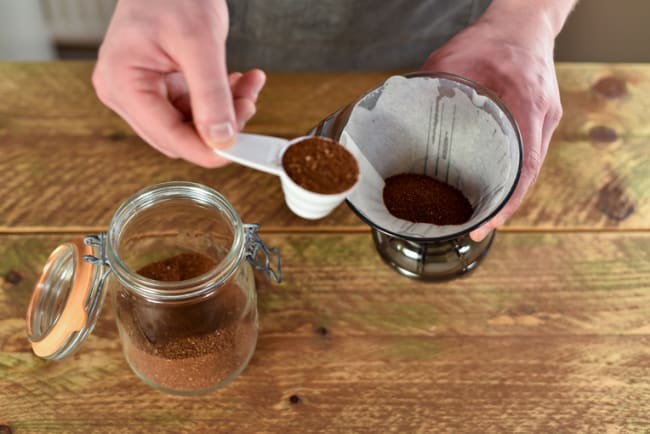
A medium-fine grind – roughly the texture of table salt – is the reliable starting point for most recipes. Too coarse and the water passes through too quickly, producing a sour, under-extracted cup. 

Too fine and the resistance makes the plunger difficult and potentially unsafe to press. The AeroPress handles a wider range of grind sizes than most brewers, which makes it a good device for experimenting once you have the basics down.

How do you clean the AeroPress? 

Cleaning takes about ten seconds. Once your press is complete, unscrew the filter cap and push the plunger all the way through to eject the compacted disc of spent grounds directly into your food waste bin. 

Rinse the rubber seal under warm water and it’s ready for the next brew. There are no fragile parts, no descaling, and nothing that requires particular care.

Should I use paper or metal filters? 

Paper filters absorb the heavier coffee oils and micro-sediment, producing a clean, bright cup with high clarity. Metal mesh filters allow those oils to pass through, giving a heavier body and richer mouthfeel – closer to a cafetière in texture. 

Paper is the better choice if you want to highlight the acidity and delicate notes of a light roast. Metal works well if you prefer something fuller and more rounded. Both are worth trying.

Is the AeroPress good for travelling? 

It’s arguably the best travel coffee maker available. The materials are shatterproof and lightweight, which means it can go into a backpack or a suitcase without wrapping or worry. 

Many people store a hand grinder inside the hollow plunger chamber to save space. It works anywhere you have access to hot water – a hotel room, a campsite, a long-haul flight if you’re persistent enough.

What coffee works best in an AeroPress? 

Freshly roasted speciality coffee makes a significant difference. Light and medium single-origin roasts from Africa or Central America work particularly well in the standard method, where the paper filter preserves clarity and the bright fruit notes come through cleanly. 

For the inverted method, a medium or dark Brazilian or Colombian roast produces a rich, chocolatey cup with more body and sweetness. 

Whatever you choose, freshness matters – the AeroPress is an efficient extractor, and stale beans produce stale coffee regardless of the method. At Pact, we roast fresh to order. 

Ready to brew better at home or on the road? Explore Pact’s full range of freshly roasted 84+ point speciality coffees at pactcoffee.com – roasted fresh to order and matched to your brewing method.

Need a bag today? Find our speciality-grade coffee in the coffee aisle at Waitrose.

Mastering AeroPress coffee: a guide to the world's most versatile brewer

Will

Written by Will

Views

Published - 29 May 2026

Key takeaways

  • The AeroPress combines full-immersion brewing with pressure and paper filtration, producing a clean, rich, sediment-free cup with almost no bitterness.
  • It’s practically indestructible, compact enough to fit in a backpack, and just as good on a camping trip as it is on a kitchen counter.
  • There are two methods: the standard upright method for a bright, clean cup, and the inverted method for a heavier body and more control over steeping time.
  • Medium-fine grind is the reliable starting point, though the AeroPress is unusually forgiving and rewards experimentation.
  • High-quality, freshly roasted speciality coffee makes a significant difference in what the AeroPress can produce. It’s a flavour magnifier as much as a brewer.

Most high-end coffee equipment follows a recognisable visual language. Gleaming steel espresso machines. Polished glass carafes. Ceramic pour-over cones that look as though they belong in a design museum. 

There’s an assumption, in the world of speciality coffee, that serious brewing requires serious-looking equipment.

The AeroPress arrived in 2005 and quietly ignored all of that.

Made from heavy-duty, BPA-free plastic and shaped a little like a very large syringe, it looked nothing like the equipment it was about to outperform. 

But it did something that none of its more elegant competitors could quite manage: it gave everyday coffee drinkers genuine control over the three core elements of a good extraction (immersion, pressure, and filtration) in a single device that costs a fraction of what a decent espresso machine does, weighs almost nothing, and is virtually impossible to break.

It has since become one of the most beloved brewers in the speciality coffee world. This is a guide to understanding why, and to getting the most out of it.

Plunging the AeroPress

What is an AeroPress coffee maker?

The AeroPress has an unusual origin story, even by the standards of the coffee world. It wasn’t invented by a barista or a coffee company. It was designed by Alan Adler, a Stanford University engineering lecturer best known as the inventor of the Aerobie flying ring, which held the Guinness World Record for the longest thrown object.

Adler was frustrated by automatic drip machines, which he found consistently under-extracted coffee and produced bitter, uneven results. He set out to design a manual brewer that could make a single, exceptionally clean cup in under two minutes.

The result is a three-part system: a brewing chamber, an airtight silicone-tipped plunger, and a perforated filter cap. Water and grounds sit together in the chamber during an immersion phase, then the plunger is pressed to force the liquid through a paper or metal filter under pressure. 

The combination of immersion and pressure extracts the soluble flavour compounds quickly and evenly, without the extended contact time that leads to over-extraction and bitterness.

It is, in practice, one of the most effective manual brewers ever made – and one of the most accessible.

Why the AeroPress is different from other brewers.

The speciality coffee world offers no shortage of manual brewing options. What makes the AeroPress worth understanding is how it sits in relation to the alternatives.

AeroPress vs. cafetière

A cafetière works through full immersion: grounds and water steep together for several minutes, then the mesh plunger is pressed to separate them. 

The result is a heavy, full-bodied cup – but the metal mesh filter allows fine particles and coffee oils to pass through freely, producing the slight sediment and muddy finish that cafetière drinkers know well. 

The brewing also continues in the cup as long as the grounds remain in contact with the liquid.

The AeroPress uses an airtight plunger to press the liquid through a paper or fine metal disc, which traps coffee grounds and produces a cleaner, more defined finish. You get the body and sweetness of immersion brewing with the clarity of a filter method.

AeroPress vs. V60

The V60 is a pour-over brewer that rewards patience and technique. The rate and consistency of your pour affects the extraction meaningfully, and getting the best out of it takes practice.

The AeroPress is considerably more forgiving. Because the grounds are fully submerged during the immersion phase, the extraction is more uniform regardless of how evenly you pour the water. 

It’s a more reliable starting point for anyone new to manual brewing, and it produces results that compete with more demanding methods at a fraction of the required attention.

An AeroPress and Gran Fondo coffee

The two methods: standard and inverted

Part of what has made the AeroPress so popular is that it can be used in two entirely different configurations, each producing a noticeably different cup.

The standard method. 

The filter cap is attached to the bottom of the chamber, which is placed directly over your mug. Grounds and water go in from the top, and the plunger is inserted just enough to create a vacuum seal that stops the liquid dripping through before you’re ready to press. Once the steep time is complete, press steadily and evenly until the plunger reaches the bottom.

This method produces a bright, clean cup that highlights the acidity and lighter fruit notes of the coffee. It’s the natural choice for single-origin African and Central American coffees where clarity of flavour is the point.

The inverted method. 

This configuration was developed by the wider community of AeroPress enthusiasts rather than by the manufacturer  – a small piece of history that says something about the brewer’s character.

The plunger is inserted a few centimetres into the bottom of the chamber, and the whole device is flipped upside down so it stands on the plunger handle. 

Grounds and water are added to the open top, allowing for a longer, more controlled immersion steep without any liquid escaping. When the steep is complete, the filter cap is screwed on, the device is carefully inverted onto a mug, and pressed.

The inverted method produces a heavier, richer cup with more body and sweetness – closer in character to a cafetière but without the sediment. 

It works particularly well with medium and dark Brazilian roasts, where extended immersion brings out notes of dark chocolate, toasted nuts, and brown sugar.

The inverted AeroPress method

Choosing the right coffee for your AeroPress

Because the AeroPress gives you so much control over the variables of brewing, it amplifies the quality of whatever you put into it. Good coffee gets noticeably better. Stale or low-grade coffee has nowhere to hide.

Mass-market supermarket coffee, typically commodity grade, roasted dark to mask inconsistency, tends to taste intensely smoky and flat when pressed under pressure. The AeroPress extracts efficiently, and it will faithfully extract whatever character is there. If the character is mostly bitterness, that’s what you’ll taste.

Freshly roasted speciality coffee, scored at 84 points or above, behaves completely differently in the brewer. The natural sugars, the aromatic oils, the distinct character of the origin – all of it comes through more clearly when the extraction is even and controlled.

For the standard upright method, a light or medium roast from a high-altitude African or Central American origin works beautifully – Rwanda or Kenya for floral, fruit-forward brightness, Colombia or Guatemala for citrus and stone fruit. The paper filter preserves the clarity that makes these coffees so interesting.

For the inverted method, a medium or dark Brazilian or Colombian roast is the natural choice. Full immersion draws out the richer, deeper compounds in the bean, and a chocolatey, nutty base holds up well to the extended steep.

A standard AeroPress recipe

This is a reliable starting point. Once you’re comfortable with the basics, the AeroPress rewards experimentation with grind size, water temperature, steep time, and ratio.

You’ll need:

  • An AeroPress and paper filter.
  • 15g of medium-fine ground coffee.
  • 200ml of water.
  • A mug and a timer.

Method:

Rinse the paper filter with a little hot water and attach the filter cap to the chamber. Place the chamber over your mug. Add 15g of medium-fine ground coffee to the chamber.

Start your timer and pour in 200ml of water just off the boil. Stir briefly to make sure all the grounds are saturated. Insert the plunger just enough to create a seal.

At one minute, begin pressing steadily and evenly. The press should take around 20 to 30 seconds. Stop pressing when you hear a gentle hiss – that’s the air being pushed through, which is your signal that the extraction is complete.

Taste and adjust. If the cup feels sour or thin, try a finer grind or a slightly longer steep. If it feels bitter or harsh, try a coarser grind or shorter steep. The AeroPress responds clearly to small changes, which is what makes it such a good brewer to learn on.

Rinse the paper filter with a little hot water and attach the filter cap to the chamber. Place the chamber over your mug. Add 15g of medium-fine ground coffee to the chamber.

Start your timer and pour in 200ml of water just off the boil. Stir briefly to make sure all the grounds are saturated. Insert the plunger just enough to create a seal.

At one minute, begin pressing steadily and evenly. The press should take around 20 to 30 seconds. Stop pressing when you hear a gentle hiss – that’s the air being pushed through, which is your signal that the extraction is complete.

You can watch a full tutorial over on our AeroPress brew guide.

FAQs

What is the best grind size for AeroPress coffee? 

A medium-fine grind – roughly the texture of table salt – is the reliable starting point for most recipes. Too coarse and the water passes through too quickly, producing a sour, under-extracted cup. 

Too fine and the resistance makes the plunger difficult and potentially unsafe to press. The AeroPress handles a wider range of grind sizes than most brewers, which makes it a good device for experimenting once you have the basics down.

How do you clean the AeroPress? 

Cleaning takes about ten seconds. Once your press is complete, unscrew the filter cap and push the plunger all the way through to eject the compacted disc of spent grounds directly into your food waste bin. 

Rinse the rubber seal under warm water and it’s ready for the next brew. There are no fragile parts, no descaling, and nothing that requires particular care.

Should I use paper or metal filters? 

Paper filters absorb the heavier coffee oils and micro-sediment, producing a clean, bright cup with high clarity. Metal mesh filters allow those oils to pass through, giving a heavier body and richer mouthfeel – closer to a cafetière in texture. 

Paper is the better choice if you want to highlight the acidity and delicate notes of a light roast. Metal works well if you prefer something fuller and more rounded. Both are worth trying.

Is the AeroPress good for travelling? 

It’s arguably the best travel coffee maker available. The materials are shatterproof and lightweight, which means it can go into a backpack or a suitcase without wrapping or worry. 

Many people store a hand grinder inside the hollow plunger chamber to save space. It works anywhere you have access to hot water – a hotel room, a campsite, a long-haul flight if you’re persistent enough.

What coffee works best in an AeroPress? 

Freshly roasted speciality coffee makes a significant difference. Light and medium single-origin roasts from Africa or Central America work particularly well in the standard method, where the paper filter preserves clarity and the bright fruit notes come through cleanly. 

For the inverted method, a medium or dark Brazilian or Colombian roast produces a rich, chocolatey cup with more body and sweetness. 

Whatever you choose, freshness matters – the AeroPress is an efficient extractor, and stale beans produce stale coffee regardless of the method. At Pact, we roast fresh to order. 

Ready to brew better at home or on the road? Explore Pact’s full range of freshly roasted 84+ point speciality coffees at pactcoffee.com – roasted fresh to order and matched to your brewing method.

Need a bag today? Find our speciality-grade coffee in the coffee aisle at Waitrose.