Best coffee for filter machines: what to buy and how to grind it Best coffee for filter machines: what to buy and how to grind it Did you know
Did you know

Best coffee for filter machines: what to buy and how to grind it

Will Sowerby

Written by Will Sowerby / Views

Published - 11 August 2026

Key takeaways

  • The best coffee for filter machines is a fresh, medium-ground speciality coffee brewed within a few weeks of roasting.
  • Filter machines need a medium grind, which is coarser than the fine grind you’d use for an espresso machine and easily confused with it.
  • The same medium grind works across home filter brewers, like those made by Sage, and commercial or office batch brewers, like the Marco.
  • Lighter roasts tend to shine in a filter machine, since the slow, even extraction draws out the delicate flavours from the beans.
  • Pact custom grinds coffee to suit filter brewing, so you get the right grind size for a drip filter, a home brewer, or a commercial machine without guessing.

What is the best coffee for filter machines?

The best coffee for filter machines is a fresh, high-quality speciality coffee, ground to a medium size and used within a few weeks of its roast date.

That’s the short answer. But the detail is where the flavour lives, so it’s worth unpacking how grind size matters, why freshness counts for so much, and which roast suits the method.

A filter machine works by dripping hot water slowly through a bed of ground coffee. Gravity does most of the work, and the water spends a fair amount of time in contact with the grounds.

That gentle, even extraction is brilliant at teasing out clarity and sweetness, but it also means the coffee you choose has nowhere to hide. Stale beans or the wrong grind show up quickly in the cup.

So the goal is simple: give the machine fresh, well-roasted coffee at the right grind size, and let the slow drip do the rest.

What grind size do filter machines need?

Filter machines need a medium grind. Think of the texture of granulated sugar, somewhere between the fine, powdery grind of an espresso machine and the chunky grind of a cafetière.

This is the single most common mistake people make with filter coffee at home. Espresso grind and filter grind are easy to mix up, but they behave very differently.

An espresso machine forces water through the grounds under pressure in around 30 seconds, so it needs a fine grind. A filter machine relies on a slow, gravity-fed drip over several minutes, so it needs a coarser, medium grind to match.

Get it wrong in either direction and you’ll taste it:

  • Too fine, and the water struggles to pass through. The coffee over-extracts and turns bitter, and you may see water pooling on top of the grounds.
  • Too coarse, and the water rushes through before it can pull out enough flavour. The result is a thin, sour, underwhelming cup.

A medium grind hits the sweet spot, giving the water an even bed to flow through at a steady pace.

Roasting beans fresh in the Pact roastery

Does the type of filter machine change the coffee you should use?

Not as much as you might think. Filter brewing machines fall into two broad camps, but they share the same core need.

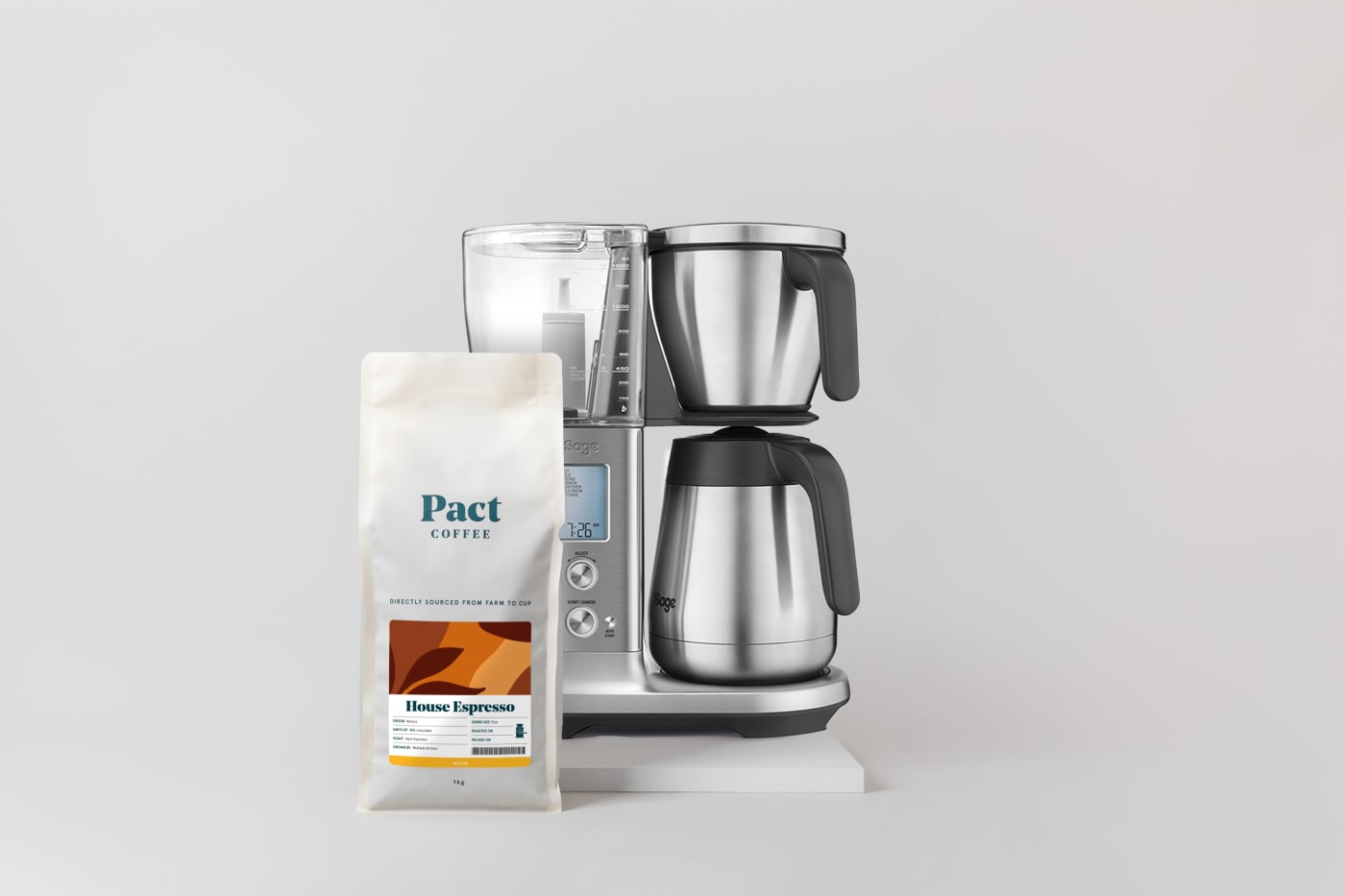
At home, you’ve got filter brewers like those made by Sage, which sit on the kitchen counter and brew a jug at a time.

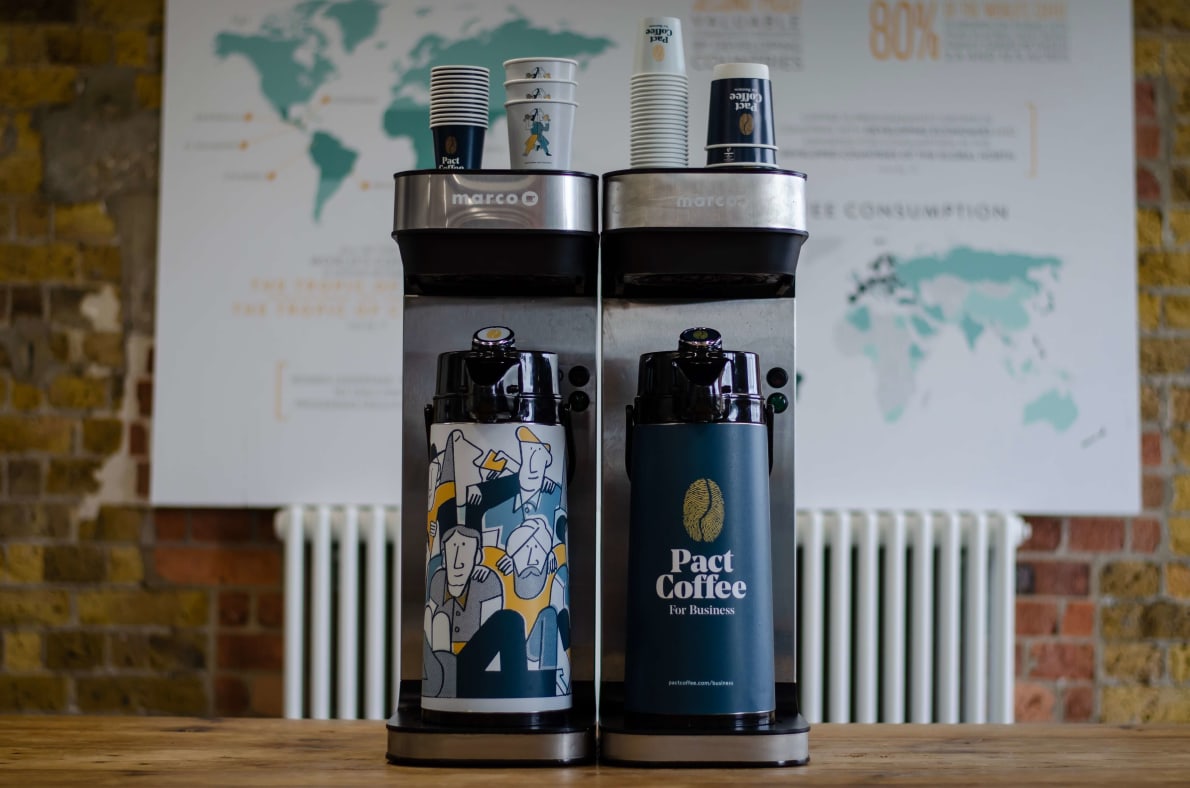
In offices, cafés, and hospitality settings, you’ll find commercial batch brewers, like the Marco, built to produce larger volumes and keep coffee fresh through a busy service.

Whether it’s a compact home machine, a manual drip filter, or a Marco batch brewer humming away in an office kitchen, the principle is identical.

Hot water drips through a bed of medium-ground coffee. So the coffee you reach for is the same across all three: fresh, speciality-grade beans at a medium grind. The machine changes the scale, not the recipe.

That’s worth knowing if you’re setting up coffee for an office. You don’t need a different product for the big commercial brewer than you’d use at home. You just need more of it, ground the same way.

What roast works best in a filter machine?

Lighter roasts tend to work beautifully in a filter machine. The slow, even extraction gives the water time to draw out the more delicate, nuanced flavours that a lighter roast preserves, the natural sweetness and fruit character that come from the bean itself and the way it was grown.

Pact roasts lighter than most for exactly this reason. A lighter roast keeps the character of the coffee intact rather than flattening it under heavy roasting, and filter brewing is one of the best ways to show that off. You’ll often notice clarity and brightness in a filter cup that a darker roast would mask.

That said, roast is a matter of taste. If you prefer a rounder, fuller cup, a medium roast still brews well in a filter machine.

The method is forgiving enough to suit a range of styles, so it’s worth trying a couple to find what you love.

Which beans suit filter brewing?

You’ve got room to experiment here, but a few pointers help.

Single-origin coffees are a natural fit for filter machines. Because the method delivers such a clean cup, it lets the specific character of one coffee come through, the taste of a particular place and the skill of the grower who produced it.

Blends work well too, especially if you want consistency and balance day to day. There’s no wrong answer, only what suits your palate.

Whatever you choose, freshness matters more than almost anything else. Coffee starts losing its aromatics soon after roasting, and filter brewing has a way of exposing tired beans.

Buying little and often and keeping your coffee in an airtight container, away from light and heat, will bring a lot to the flavour in your cup.

Making filter coffee with Marco batch brewers

How much coffee should you use in a filter machine?

A good starting point is a brew ratio of roughly 60 grams of coffee per litre of water, which works out at around 7 to 8 grams per standard mug.

It’s a widely used guideline rather than a hard rule, so treat it as your baseline and adjust to taste.

If your coffee tastes weak or sour, try using a little more coffee or a slightly finer grind. If it tastes bitter or harsh, ease off the dose or go a touch coarser.

Small tweaks make a real difference, and once you land on a ratio you like, you can repeat it every morning.

Can you use pre-ground coffee in a filter machine?

Yes, and it’s often the easiest route, as long as the coffee is ground for the right method. This is where the grind confusion causes trouble, because a bag labelled simply as ‘ground coffee’ won’t always tell you what it’s ground for.

At Pact, we custom grind coffee to suit your brewing method, so if you’re using a drip filter, a home filter brewer, or a commercial filter machine, you can have your beans ground to the medium consistency that method needs.

That takes the guesswork out of it and means the coffee behaves the way it should the moment it hits the machine.

If you’d rather grind at home, wholebean coffee ground fresh just before brewing will always give you the best flavour, since the aromatics stay locked in until the last moment.

But freshly custom-ground coffee, used promptly, is a very close second and far simpler for a busy morning or a shared office machine.

Get freshly roasted speciality coffee custom-ground for your filter machine – and save 25% on your first two orders.

Looking for coffee for your business? Head here to get started.

FAQs

What grind is best for a filter coffee machine?

A medium grind, roughly the texture of granulated sugar. It’s coarser than espresso grind and finer than the grind you’d use in a cafetière.

Is filter coffee the same as drip coffee?

Yes. ‘Filter coffee’ and ‘drip coffee’ describe the same brewing method, where hot water drips slowly through a bed of ground coffee and a paper or mesh filter.

Can I use espresso coffee in a filter machine?

It’s best not to. Espresso is ground much finer, so it tends to clog the filter, slow the drip, and over-extract into a bitter cup. Use a medium filter grind instead.

What’s the best coffee for an office filter machine?

The same fresh, medium-ground speciality coffee you’d use at home, just in larger quantities. A commercial batch brewer like a Marco uses the same grind as a home filter brewer.

How fresh does filter coffee need to be?

As fresh as you can get it. Coffee is at its best in the weeks after roasting, and filter brewing tends to expose beans that are past their prime, so buy little and often.

Best coffee for filter machines: what to buy and how to grind it

Will Sowerby

Written by Will Sowerby

Views

Published - 11 August 2026

Key takeaways

  • The best coffee for filter machines is a fresh, medium-ground speciality coffee brewed within a few weeks of roasting.
  • Filter machines need a medium grind, which is coarser than the fine grind you’d use for an espresso machine and easily confused with it.
  • The same medium grind works across home filter brewers, like those made by Sage, and commercial or office batch brewers, like the Marco.
  • Lighter roasts tend to shine in a filter machine, since the slow, even extraction draws out the delicate flavours from the beans.
  • Pact custom grinds coffee to suit filter brewing, so you get the right grind size for a drip filter, a home brewer, or a commercial machine without guessing.

What is the best coffee for filter machines?

The best coffee for filter machines is a fresh, high-quality speciality coffee, ground to a medium size and used within a few weeks of its roast date.

That’s the short answer. But the detail is where the flavour lives, so it’s worth unpacking how grind size matters, why freshness counts for so much, and which roast suits the method.

A filter machine works by dripping hot water slowly through a bed of ground coffee. Gravity does most of the work, and the water spends a fair amount of time in contact with the grounds.

That gentle, even extraction is brilliant at teasing out clarity and sweetness, but it also means the coffee you choose has nowhere to hide. Stale beans or the wrong grind show up quickly in the cup.

So the goal is simple: give the machine fresh, well-roasted coffee at the right grind size, and let the slow drip do the rest.

What grind size do filter machines need?

Filter machines need a medium grind. Think of the texture of granulated sugar, somewhere between the fine, powdery grind of an espresso machine and the chunky grind of a cafetière.

This is the single most common mistake people make with filter coffee at home. Espresso grind and filter grind are easy to mix up, but they behave very differently.

An espresso machine forces water through the grounds under pressure in around 30 seconds, so it needs a fine grind. A filter machine relies on a slow, gravity-fed drip over several minutes, so it needs a coarser, medium grind to match.

Get it wrong in either direction and you’ll taste it:

  • Too fine, and the water struggles to pass through. The coffee over-extracts and turns bitter, and you may see water pooling on top of the grounds.
  • Too coarse, and the water rushes through before it can pull out enough flavour. The result is a thin, sour, underwhelming cup.

A medium grind hits the sweet spot, giving the water an even bed to flow through at a steady pace.

Roasting beans fresh in the Pact roastery

Does the type of filter machine change the coffee you should use?

Not as much as you might think. Filter brewing machines fall into two broad camps, but they share the same core need.

At home, you’ve got filter brewers like those made by Sage, which sit on the kitchen counter and brew a jug at a time.

In offices, cafés, and hospitality settings, you’ll find commercial batch brewers, like the Marco, built to produce larger volumes and keep coffee fresh through a busy service.

Whether it’s a compact home machine, a manual drip filter, or a Marco batch brewer humming away in an office kitchen, the principle is identical.

Hot water drips through a bed of medium-ground coffee. So the coffee you reach for is the same across all three: fresh, speciality-grade beans at a medium grind. The machine changes the scale, not the recipe.

That’s worth knowing if you’re setting up coffee for an office. You don’t need a different product for the big commercial brewer than you’d use at home. You just need more of it, ground the same way.

What roast works best in a filter machine?

Lighter roasts tend to work beautifully in a filter machine. The slow, even extraction gives the water time to draw out the more delicate, nuanced flavours that a lighter roast preserves, the natural sweetness and fruit character that come from the bean itself and the way it was grown.

Pact roasts lighter than most for exactly this reason. A lighter roast keeps the character of the coffee intact rather than flattening it under heavy roasting, and filter brewing is one of the best ways to show that off. You’ll often notice clarity and brightness in a filter cup that a darker roast would mask.

That said, roast is a matter of taste. If you prefer a rounder, fuller cup, a medium roast still brews well in a filter machine.

The method is forgiving enough to suit a range of styles, so it’s worth trying a couple to find what you love.

Which beans suit filter brewing?

You’ve got room to experiment here, but a few pointers help.

Single-origin coffees are a natural fit for filter machines. Because the method delivers such a clean cup, it lets the specific character of one coffee come through, the taste of a particular place and the skill of the grower who produced it.

Blends work well too, especially if you want consistency and balance day to day. There’s no wrong answer, only what suits your palate.

Whatever you choose, freshness matters more than almost anything else. Coffee starts losing its aromatics soon after roasting, and filter brewing has a way of exposing tired beans.

Buying little and often and keeping your coffee in an airtight container, away from light and heat, will bring a lot to the flavour in your cup.

Making filter coffee with Marco batch brewers

How much coffee should you use in a filter machine?

A good starting point is a brew ratio of roughly 60 grams of coffee per litre of water, which works out at around 7 to 8 grams per standard mug.

It’s a widely used guideline rather than a hard rule, so treat it as your baseline and adjust to taste.

If your coffee tastes weak or sour, try using a little more coffee or a slightly finer grind. If it tastes bitter or harsh, ease off the dose or go a touch coarser.

Small tweaks make a real difference, and once you land on a ratio you like, you can repeat it every morning.

Can you use pre-ground coffee in a filter machine?

Yes, and it’s often the easiest route, as long as the coffee is ground for the right method. This is where the grind confusion causes trouble, because a bag labelled simply as ‘ground coffee’ won’t always tell you what it’s ground for.

At Pact, we custom grind coffee to suit your brewing method, so if you’re using a drip filter, a home filter brewer, or a commercial filter machine, you can have your beans ground to the medium consistency that method needs.

That takes the guesswork out of it and means the coffee behaves the way it should the moment it hits the machine.

If you’d rather grind at home, wholebean coffee ground fresh just before brewing will always give you the best flavour, since the aromatics stay locked in until the last moment.

But freshly custom-ground coffee, used promptly, is a very close second and far simpler for a busy morning or a shared office machine.

Get freshly roasted speciality coffee custom-ground for your filter machine – and save 25% on your first two orders.

Looking for coffee for your business? Head here to get started.

FAQs

What grind is best for a filter coffee machine?

A medium grind, roughly the texture of granulated sugar. It’s coarser than espresso grind and finer than the grind you’d use in a cafetière.

Is filter coffee the same as drip coffee?

Yes. ‘Filter coffee’ and ‘drip coffee’ describe the same brewing method, where hot water drips slowly through a bed of ground coffee and a paper or mesh filter.

Can I use espresso coffee in a filter machine?

It’s best not to. Espresso is ground much finer, so it tends to clog the filter, slow the drip, and over-extract into a bitter cup. Use a medium filter grind instead.

What’s the best coffee for an office filter machine?

The same fresh, medium-ground speciality coffee you’d use at home, just in larger quantities. A commercial batch brewer like a Marco uses the same grind as a home filter brewer.

How fresh does filter coffee need to be?

As fresh as you can get it. Coffee is at its best in the weeks after roasting, and filter brewing tends to expose beans that are past their prime, so buy little and often.