The guide to filter coffee: brewing a great cup at home The guide to filter coffee: brewing a great cup at home Did you know
Did you know

The guide to filter coffee: brewing a great cup at home

Will Sowerby

Written by Will Sowerby / Views

Published - 11 June 2026

Key takeaways

  • Filter coffee passes hot water through ground coffee and a paper, metal, or cloth filter, producing a clean, sediment-free cup that lets the character of the bean come through clearly.
  • At Pact, our perfect ratio is 60g of coffee per litre of water – roughly 15g per 250ml cup.
  • Water temperature matters: 92°C to 96°C is the sweet spot. Too hot and you risk scorching the aromatic oils. Too cool and the cup will taste flat and sour.
  • Grinding just before you brew makes a significant difference. The moment a bean is ground, oxidation begins – whole beans preserve the flavour that careful growing and roasting have produced.
  • Pact’s Colombia Single Origin, grown by the Mirtayu Women’s Group in Huila, is available in Waitrose stores nationwide and online – ground specifically for filter brewing, with tasting notes of milk chocolate and orange.

For many people, filter coffee makes the morning. Not something that requires expensive equipment, laborious technique, or explanation – just hot water, ground coffee, and a few minutes of quiet before the day begins.

There’s a reason the world’s most celebrated speciality coffees are almost always tasted as filter coffee. The method doesn’t rely on pressure or mechanical force. It uses gravity, water temperature, and clean filtration to draw the flavour out slowly and clearly – producing a cup where the character of the bean, the origin, and the grower’s work can come through without interference.

Whether you’re brewing on an automatic drip machine, learning to use a V60 for the first time, or simply wondering why your home coffee doesn’t taste quite like the cup you had at your favourite café, this guide covers everything you need to make the perfect filter coffee.

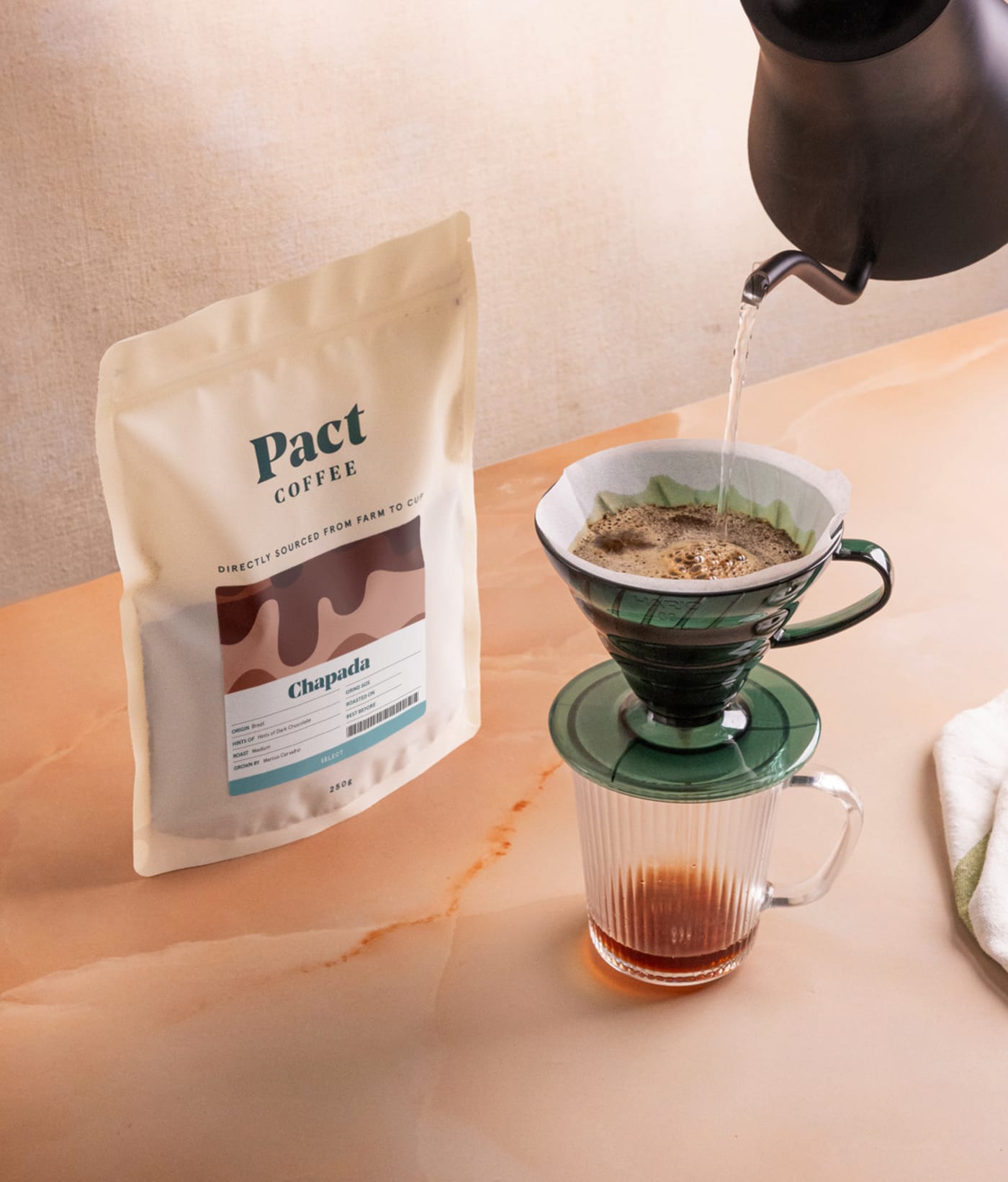
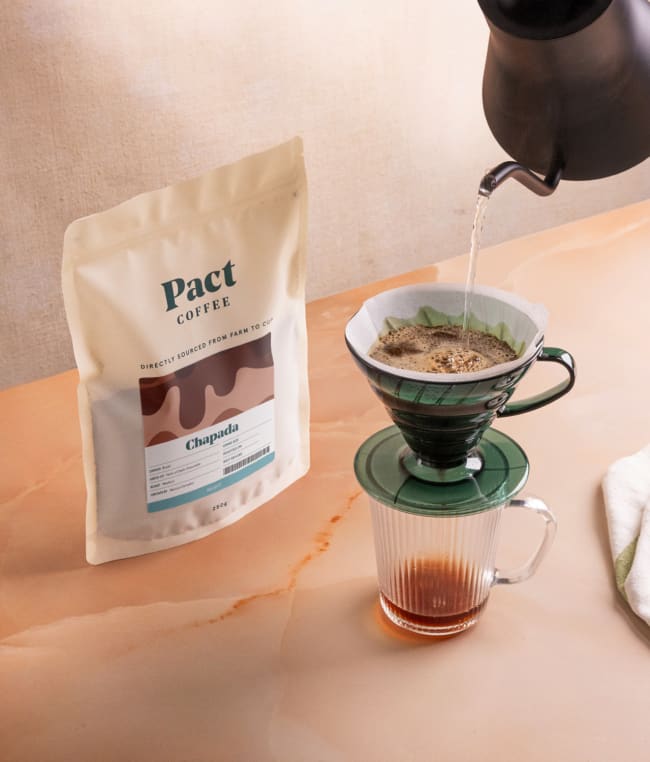
Brewing with a V60
Brewing with a V60

What is filter coffee?

Filter coffee is a brewing method in which hot water is poured over ground coffee and allowed to pass through a filter of some sort – most commonly a paper filter, though fine metal mesh and cloth are also used – into a cup or carafe below.

The filter does two important things. It traps the insoluble coffee particles (those that can’t be dissolved) that would otherwise make the cup cloudy and gritty. And it captures a significant portion of the diterpene oils – the heavier compounds that, in an unfiltered brew, contribute to a denser, sometimes muddy mouthfeel.

The result is a cup with what the speciality-coffee world calls clarity: a clean, bright coffee in which the natural tasting notes of the coffee (delicate florals, zesty citrus, rich chocolate) come through without the heavy oils and sediment that can mask them.

This is why filter coffee is the preferred method for tasting single-origin speciality lots. It lets the terroir, the altitude, and the skill of the grower speak clearly.

Muungano, Best of Congo Cooperatives winner

How to make filter coffee

Making great filter coffee doesn’t require a great deal of equipment, but it does require attention to a few variables: water quality, brewing ratio, and the patience to pour slowly and steadily.

Here’s how to make filter coffee using a manual pour-over dripper (a V60 or Chemex work well) or a quality automatic drip machine.

Rinse the filter

Place your paper filter in the brewing cone and pour hot water through it before you add any coffee.

This removes the faint papery taste that an unrinsed filter can leave in the cup, and pre-heats your filter so the water temperature stays consistent during the brew. Discard the rinse water.

Weigh your coffee

For a 250ml cup, weigh out 15g of medium-ground coffee. A digital scale makes a real difference here – the consistency it provides from one morning to the next is worth the small investment.

The bloom

Pour around 50ml of water, heated to between 92°C and 96°C (just off boiling), over the dry grounds. Make sure the water touches every part of the bed. Leave it for 30 to 45 seconds and watch the coffee swell and bubble (we call this the bloom) as the CO2 trapped inside the grounds releases. 

This degassing phase is important – if the gas isn’t allowed to escape first, it can disrupt the extraction and produce an uneven cup.

The main pour

Pour the remaining 200ml of water in slow, steady, concentric circles, moving from the centre outward. 

Keep the pour gentle and avoid hitting the paper filter directly – water that bypasses the coffee bed entirely doesn’t extract anything useful. 

The full brew should take around three minutes from first pour to last drop.

Brewing with the Fellow Stagg X Pour-over Dripper

How to brew ground coffee

The goal of any filter brew is to extract the sweet, complex compounds from each ground particle while leaving behind the harsh, woody tannins that cause bitterness.
Water temperature and technique are the two variables that determine where that balance lands.

Always use water that’s just below boiling – 92°C to 96°C is the reliable range. Water poured straight from a boiling kettle risks scorching the aromatic oils in the bean, which produces a flat, slightly burnt character.

Water that’s cooled too far produces an under-extracted cup that tastes thin, sour, and disappointing.

If you’re brewing manually, a gentle stir of the grounds during the bloom phase helps ensure every particle comes into contact with water evenly, which reduces the risk of dry pockets and uneven extraction. It takes five seconds and makes a consistent difference.

How to prepare ground coffee

If you’re using a pre-ground bag, making sure the grind is matched to your equipment is the most important preparation step.

For a drip machine or manual pour-over, you want a medium grind – roughly the consistency of coarse sand. Too fine and the grounds will clog the filter, slowing the flow and producing a bitter, over-extracted result. Too coarse and the water passes through too quickly, leaving the cup weak and flat.

Once the bag is open, protect the grounds from their three main enemies: oxygen, moisture, and light. 

Seal the bag tightly using the built-in resealable strip after each use, and store it in a cool, dark cupboard away from the hob or kettle. 

Never store ground coffee in the fridge – the humidity causes the grounds to absorb surrounding odours and degrades the aromatic compounds that carry the flavour.

How to make filter coffee from whole beans

For the best filter coffee at home, grinding whole beans immediately before brewing is the most significant upgrade you can make.

The moment a coffee bean is ground, its internal surface area increases dramatically and oxidation begins. The volatile aromatic compounds that carry the brightness, the sweetness, and the complexity of a well-grown speciality bean start to dissipate within hours. 

Buying whole beans and grinding them just before you brew means those compounds go into the cup rather than into the air.

For filter brewing, a burr grinder produces a meaningfully better result than a blade grinder. A blade grinder cuts unevenly, producing a mix of very fine dust and large fragments that extract at completely different rates – the fine particles over-extract and turn bitter, while the coarser pieces under-extract and taste flat. 

A burr grinder uses two abrasive surfaces to produce uniform particles that all extract at the same rate, which is what gives a well-brewed filter coffee its clean, balanced character.

Set your burr grinder to a medium setting for filter, brew immediately, and taste the difference.

Flash-chill brewing with the V60

The best filter coffee beans for brewing at home

The best filter coffee starts with beans that have something worth tasting – grown at altitude, processed with care, and roasted to let the origin character come through rather than mask it.

Pact’s Colombia Single Origin is now available in Waitrose stores nationwide and online at waitrose.com. 

It’s the first retail release from the Equal Ground Project, and the coffee behind it is grown by the Mirtayu Women’s Group – three skilled growers based in the hills of Huila, one of Colombia’s most celebrated speciality coffee regions. 

The group farms independently but shares knowledge, process, and routes to market, and as the coffee sells, they invest in bringing more women into the cooperative.

It’s  ground specifically for filter brewing, delivering smooth hints of milk chocolate alongside a bright, clean note of orange. 

It’s the kind of cup that rewards a slow morning and a properly brewed pot – and it’s available alongside your regular weekly shop.

FAQs

What is filter coffee? 

Filter coffee is a brewing method in which hot water passes through ground coffee and a filter medium (paper, metal, or cloth) with gravity, producing a clean, sediment-free cup. 

The filter removes the heavier oils and fine particles that an unfiltered method, like a cafetière, leaves in, resulting in a cup with greater clarity and a cleaner finish. 

It’s the preferred method for tasting single-origin speciality coffees because it lets the character of the bean come through without interference.

How do I make the best filter coffee at home? 

Start with fresh speciality-grade coffee – whole beans if possible, ground just before brewing to a medium consistency. 

Use 15g of coffee per 250ml of water, heated to between 92°C and 96°C. Rinse the paper filter before use, allow 30 to 45 seconds for the bloom phase, and pour slowly and steadily in concentric circles. 

The full brew should take around three minutes. Consistency in ratio and temperature makes the biggest difference between a good cup and a great one.

What grind size should I use for filter coffee? 

A medium grind (roughly the texture of sand) is the reliable starting point for most filter brewing methods, including V60, Chemex, and automatic drip machines. 

Too fine and the filter clogs, producing a bitter, over-extracted cup. Too coarse and the water passes through too quickly, leaving the brew weak and flat.

What is the difference between filter coffee and espresso? 

Filter coffee uses gravity and a relatively low water-to-coffee ratio over a longer brew time, producing a clean, lighter-bodied cup with high flavour clarity. 

Espresso uses high pressure to force a small amount of hot water through very finely ground coffee in around 30 seconds, producing a concentrated, full-bodied shot with a layer of crema. 

Filter coffee is generally better suited to showcasing the delicate and complex notes of single-origin speciality beans. Espresso tends to highlight richness, body, and intensity.

Can I use espresso beans for filter coffee? 

Yes, though the results will depend on the roast profile. Espresso roasts tend toward medium-dark or dark, which produces a heavier, more intense cup when brewed as filter. 

If you prefer a brighter, more complex filter coffee, a light or medium roast is the better choice – the lower roast level preserves the acidity and the origin character that filter brewing is particularly good at showcasing.

What makes speciality coffee better for filter brewing? 

Speciality coffee, scored at 80 points or above by certified tasters, is grown in specific conditions (high altitude, careful processing, attentive harvesting) that produce natural complexity and sweetness in the bean. 

Filter brewing, with its clarity and clean finish, is an ideal method for expressing those qualities. Commodity coffee, roasted dark to mask inconsistency, tends to taste flat or bitter when brewed with a filter.

Pact’s Colombia Single Origin, grown by the Mirtayu Women’s Group in Huila, is pre-ground for filter brewing and available now in the coffee aisle at Waitrose and on waitrose.com.

The guide to filter coffee: brewing a great cup at home

Will Sowerby

Written by Will Sowerby

Views

Published - 11 June 2026

Key takeaways

  • Filter coffee passes hot water through ground coffee and a paper, metal, or cloth filter, producing a clean, sediment-free cup that lets the character of the bean come through clearly.
  • At Pact, our perfect ratio is 60g of coffee per litre of water – roughly 15g per 250ml cup.
  • Water temperature matters: 92°C to 96°C is the sweet spot. Too hot and you risk scorching the aromatic oils. Too cool and the cup will taste flat and sour.
  • Grinding just before you brew makes a significant difference. The moment a bean is ground, oxidation begins – whole beans preserve the flavour that careful growing and roasting have produced.
  • Pact’s Colombia Single Origin, grown by the Mirtayu Women’s Group in Huila, is available in Waitrose stores nationwide and online – ground specifically for filter brewing, with tasting notes of milk chocolate and orange.

For many people, filter coffee makes the morning. Not something that requires expensive equipment, laborious technique, or explanation – just hot water, ground coffee, and a few minutes of quiet before the day begins.

There’s a reason the world’s most celebrated speciality coffees are almost always tasted as filter coffee. The method doesn’t rely on pressure or mechanical force. It uses gravity, water temperature, and clean filtration to draw the flavour out slowly and clearly – producing a cup where the character of the bean, the origin, and the grower’s work can come through without interference.

Whether you’re brewing on an automatic drip machine, learning to use a V60 for the first time, or simply wondering why your home coffee doesn’t taste quite like the cup you had at your favourite café, this guide covers everything you need to make the perfect filter coffee.

Brewing with a V60
Brewing with a V60

What is filter coffee?

Filter coffee is a brewing method in which hot water is poured over ground coffee and allowed to pass through a filter of some sort – most commonly a paper filter, though fine metal mesh and cloth are also used – into a cup or carafe below.

The filter does two important things. It traps the insoluble coffee particles (those that can’t be dissolved) that would otherwise make the cup cloudy and gritty. And it captures a significant portion of the diterpene oils – the heavier compounds that, in an unfiltered brew, contribute to a denser, sometimes muddy mouthfeel.

The result is a cup with what the speciality-coffee world calls clarity: a clean, bright coffee in which the natural tasting notes of the coffee (delicate florals, zesty citrus, rich chocolate) come through without the heavy oils and sediment that can mask them.

This is why filter coffee is the preferred method for tasting single-origin speciality lots. It lets the terroir, the altitude, and the skill of the grower speak clearly.

Muungano, Best of Congo Cooperatives winner

How to make filter coffee

Making great filter coffee doesn’t require a great deal of equipment, but it does require attention to a few variables: water quality, brewing ratio, and the patience to pour slowly and steadily.

Here’s how to make filter coffee using a manual pour-over dripper (a V60 or Chemex work well) or a quality automatic drip machine.

Rinse the filter

Place your paper filter in the brewing cone and pour hot water through it before you add any coffee.

This removes the faint papery taste that an unrinsed filter can leave in the cup, and pre-heats your filter so the water temperature stays consistent during the brew. Discard the rinse water.

Weigh your coffee

For a 250ml cup, weigh out 15g of medium-ground coffee. A digital scale makes a real difference here – the consistency it provides from one morning to the next is worth the small investment.

The bloom

Pour around 50ml of water, heated to between 92°C and 96°C (just off boiling), over the dry grounds. Make sure the water touches every part of the bed. Leave it for 30 to 45 seconds and watch the coffee swell and bubble (we call this the bloom) as the CO2 trapped inside the grounds releases. 

This degassing phase is important – if the gas isn’t allowed to escape first, it can disrupt the extraction and produce an uneven cup.

The main pour

Pour the remaining 200ml of water in slow, steady, concentric circles, moving from the centre outward. 

Keep the pour gentle and avoid hitting the paper filter directly – water that bypasses the coffee bed entirely doesn’t extract anything useful. 

The full brew should take around three minutes from first pour to last drop.

Brewing with the Fellow Stagg X Pour-over Dripper

How to brew ground coffee

The goal of any filter brew is to extract the sweet, complex compounds from each ground particle while leaving behind the harsh, woody tannins that cause bitterness.
Water temperature and technique are the two variables that determine where that balance lands.

Always use water that’s just below boiling – 92°C to 96°C is the reliable range. Water poured straight from a boiling kettle risks scorching the aromatic oils in the bean, which produces a flat, slightly burnt character.

Water that’s cooled too far produces an under-extracted cup that tastes thin, sour, and disappointing.

If you’re brewing manually, a gentle stir of the grounds during the bloom phase helps ensure every particle comes into contact with water evenly, which reduces the risk of dry pockets and uneven extraction. It takes five seconds and makes a consistent difference.

How to prepare ground coffee

If you’re using a pre-ground bag, making sure the grind is matched to your equipment is the most important preparation step.

For a drip machine or manual pour-over, you want a medium grind – roughly the consistency of coarse sand. Too fine and the grounds will clog the filter, slowing the flow and producing a bitter, over-extracted result. Too coarse and the water passes through too quickly, leaving the cup weak and flat.

Once the bag is open, protect the grounds from their three main enemies: oxygen, moisture, and light. 

Seal the bag tightly using the built-in resealable strip after each use, and store it in a cool, dark cupboard away from the hob or kettle. 

Never store ground coffee in the fridge – the humidity causes the grounds to absorb surrounding odours and degrades the aromatic compounds that carry the flavour.

How to make filter coffee from whole beans

For the best filter coffee at home, grinding whole beans immediately before brewing is the most significant upgrade you can make.

The moment a coffee bean is ground, its internal surface area increases dramatically and oxidation begins. The volatile aromatic compounds that carry the brightness, the sweetness, and the complexity of a well-grown speciality bean start to dissipate within hours. 

Buying whole beans and grinding them just before you brew means those compounds go into the cup rather than into the air.

For filter brewing, a burr grinder produces a meaningfully better result than a blade grinder. A blade grinder cuts unevenly, producing a mix of very fine dust and large fragments that extract at completely different rates – the fine particles over-extract and turn bitter, while the coarser pieces under-extract and taste flat. 

A burr grinder uses two abrasive surfaces to produce uniform particles that all extract at the same rate, which is what gives a well-brewed filter coffee its clean, balanced character.

Set your burr grinder to a medium setting for filter, brew immediately, and taste the difference.

Flash-chill brewing with the V60

The best filter coffee beans for brewing at home

The best filter coffee starts with beans that have something worth tasting – grown at altitude, processed with care, and roasted to let the origin character come through rather than mask it.

Pact’s Colombia Single Origin is now available in Waitrose stores nationwide and online at waitrose.com. 

It’s the first retail release from the Equal Ground Project, and the coffee behind it is grown by the Mirtayu Women’s Group – three skilled growers based in the hills of Huila, one of Colombia’s most celebrated speciality coffee regions. 

The group farms independently but shares knowledge, process, and routes to market, and as the coffee sells, they invest in bringing more women into the cooperative.

It’s  ground specifically for filter brewing, delivering smooth hints of milk chocolate alongside a bright, clean note of orange. 

It’s the kind of cup that rewards a slow morning and a properly brewed pot – and it’s available alongside your regular weekly shop.

FAQs

What is filter coffee? 

Filter coffee is a brewing method in which hot water passes through ground coffee and a filter medium (paper, metal, or cloth) with gravity, producing a clean, sediment-free cup. 

The filter removes the heavier oils and fine particles that an unfiltered method, like a cafetière, leaves in, resulting in a cup with greater clarity and a cleaner finish. 

It’s the preferred method for tasting single-origin speciality coffees because it lets the character of the bean come through without interference.

How do I make the best filter coffee at home? 

Start with fresh speciality-grade coffee – whole beans if possible, ground just before brewing to a medium consistency. 

Use 15g of coffee per 250ml of water, heated to between 92°C and 96°C. Rinse the paper filter before use, allow 30 to 45 seconds for the bloom phase, and pour slowly and steadily in concentric circles. 

The full brew should take around three minutes. Consistency in ratio and temperature makes the biggest difference between a good cup and a great one.

What grind size should I use for filter coffee? 

A medium grind (roughly the texture of sand) is the reliable starting point for most filter brewing methods, including V60, Chemex, and automatic drip machines. 

Too fine and the filter clogs, producing a bitter, over-extracted cup. Too coarse and the water passes through too quickly, leaving the brew weak and flat.

What is the difference between filter coffee and espresso? 

Filter coffee uses gravity and a relatively low water-to-coffee ratio over a longer brew time, producing a clean, lighter-bodied cup with high flavour clarity. 

Espresso uses high pressure to force a small amount of hot water through very finely ground coffee in around 30 seconds, producing a concentrated, full-bodied shot with a layer of crema. 

Filter coffee is generally better suited to showcasing the delicate and complex notes of single-origin speciality beans. Espresso tends to highlight richness, body, and intensity.

Can I use espresso beans for filter coffee? 

Yes, though the results will depend on the roast profile. Espresso roasts tend toward medium-dark or dark, which produces a heavier, more intense cup when brewed as filter. 

If you prefer a brighter, more complex filter coffee, a light or medium roast is the better choice – the lower roast level preserves the acidity and the origin character that filter brewing is particularly good at showcasing.

What makes speciality coffee better for filter brewing? 

Speciality coffee, scored at 80 points or above by certified tasters, is grown in specific conditions (high altitude, careful processing, attentive harvesting) that produce natural complexity and sweetness in the bean. 

Filter brewing, with its clarity and clean finish, is an ideal method for expressing those qualities. Commodity coffee, roasted dark to mask inconsistency, tends to taste flat or bitter when brewed with a filter.

Pact’s Colombia Single Origin, grown by the Mirtayu Women’s Group in Huila, is pre-ground for filter brewing and available now in the coffee aisle at Waitrose and on waitrose.com.