Speciality coffee quality scores explained: a guide to the SCA scale Speciality coffee quality scores explained: a guide to the SCA scale Did you know
Did you know

Speciality coffee quality scores explained: a guide to the SCA scale

Will

Written by Will / Views

Published - 06 June 2016 / Updated - 27 May 2026

Key takeaways

  • Coffee is graded on a 100-point scale by certified tasters, called Q Graders. Any coffee scoring 80 points or above is officially classified as speciality grade.
  • Most mass-produced supermarket coffee sits between 65 and 80 points – commodity grade, typically blended and roasted to mask inconsistency, rather than celebrate character.
  • Pact sources exclusively coffees scoring 84 points or above – a standard that requires the kind of skill that deserves to be recognised and celebrated.
  • A coffee’s score is determined through a rigorous blind tasting process called cupping, evaluated across ten specific sensory attributes by professional tasters.
  • At Pact, we believe that when a grower produces coffee of genuine excellence, that excellence should be reflected in what they’re paid for it.

If you’ve noticed a number printed on the packaging of your speciality coffee, 84, 86, 90, and wondered what it means, this is the guide for you.

In the global coffee trade, that number is the most reliable measure of quality available. In short, it tells you how it performed when evaluated by professional tasters. 

It’s not simply marketing, but the result of a rigorous, standardised assessment that applies the same criteria to every coffee in the world, from a smallholder farm in Rwanda to a large estate in Brazil.

Understanding it changes how you read a coffee bag, and why the difference between a bag that carries a score and one that doesn’t is far more significant than it might seem.

What is a speciality coffee quality score?

To compare coffees from different origins, different farms, and different harvests on equal terms, the global coffee industry needed a shared language. The Speciality Coffee Association developed a 100-point sensory grading system – the same principle as wine scoring, applied with the same rigour, but to coffee.

Under this framework, coffee is divided into two distinct categories.

Commodity grade: scores below 80

The majority of the world’s coffee falls here, typically scoring between 65 and 80 points.

This is the coffee destined for instant jars and commercial espresso blends. At this level, crops are often harvested quickly – ripe cherries mixed with unripe ones, sorted imprecisely, and blended across multiple farms and origins to produce a consistent, anonymous product. 

The flavour profile reflects that process: flat, bitter, and largely indistinguishable from one bag to the next. Buyers purchase these lots on commodity markets at a flat price per pound, with no reference to the skill of the grower or the quality of their work.

Speciality grade: scores between 80 and 100

To earn speciality status, a coffee must score 80 points or above and be entirely free of primary physical defects. This distinction applies to a small fraction of the global harvest. 

These coffees are grown in specific microclimates, at high altitudes, harvested carefully to ensure only ripe cherries are selected, and processed with the kind of attention to detail that produces something genuinely worth tasting. 

Every element of the journey, from the soil the tree grows in to the temperature at which the cherry dries, contributes to its final flavour.

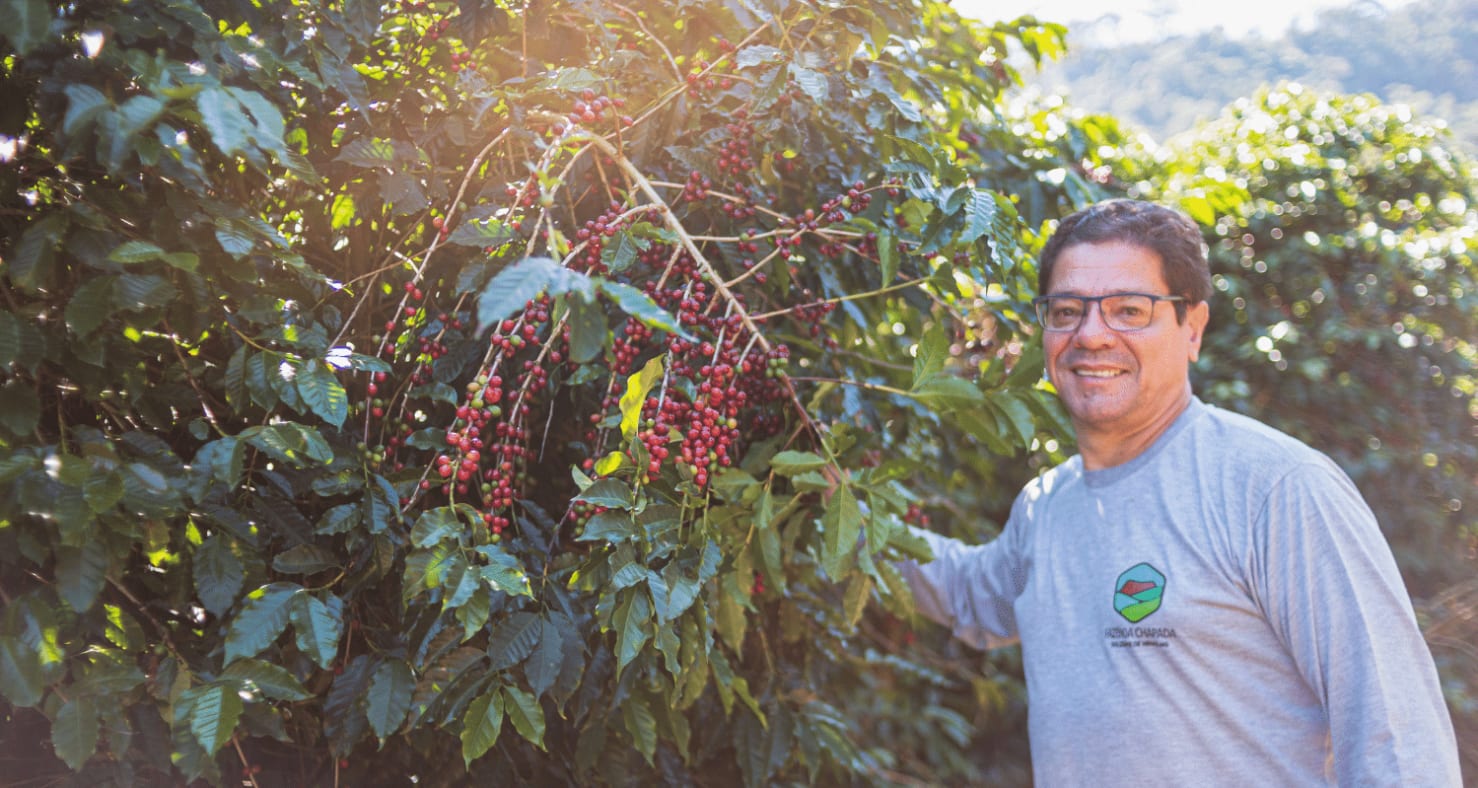
Marcus Carvalho, one of Brazil's most skilled speciality-coffee growers

How is a coffee score decided? The process of cupping

A coffee score is determined through a standardised blind-tasting process called cupping – the coffee world’s equivalent of a formal wine tasting.

Cupping is carried out by Q Graders, certified professionals who have passed a series of 20 rigorous examinations testing sensory acuity, defect identification, and flavour calibration. 

At Pact’s roastery in Haslemere, our internal quality team cups samples from every lot we buy, evaluating them against the same criteria before any coffee reaches a customer.

In a professional cupping session, the coffee is roasted to a precise profile, ground to a uniform consistency, and brewed with exact water-to-coffee ratios. Q Graders then evaluate it across ten specific sensory attributes, scoring each out of ten.

Rony Gámez (left) one of the world's leading speciality-coffee experts

Fragrance and aroma

The assessment begins before any liquid is tasted. Graders evaluate the fragrance of the dry, freshly ground coffee, then the aroma of the wet grounds once hot water is added. 

This first impression reveals the aromatic complexity locked inside the bean and gives an early indication of what the cup will deliver.

Flavour 

The combined impression of taste and aroma – the full sensory experience of drinking the coffee. 

A high-scoring coffee will have clear, well-developed flavour characteristics: hazelnut and dark chocolate at one end of the spectrum, peach, cherry, or blackcurrant at the other.

Aftertaste

The length and quality of the flavour that lingers after swallowing. A positive aftertaste is clean, sweet, and inviting, the kind that makes you reach for another sip. 

Commodity coffees tend to leave a dry, burnt-tasting bitterness that fades unpleasantly.

Acidity

Acidity in speciality coffee is often mistaken for sourness, but it’s actually the liveliness and brightness of the cup. 

Good acidity is crisp, sweet, and complex – the green apple quality of malic acid, or the citrus clarity of citric acid. It should feel like a bonus, not a negative.

Body and mouthfeel

The physical weight and texture of the coffee on the tongue – the difference between something light and tea-like, and something rich and almost syrupy. 

Q Graders assess whether the body is pleasant, consistent, and suited to the coffee’s origin character.

Balance

This is how well the acidity, sweetness, flavour, and body work together as a whole. 

In a well-balanced coffee, no single attribute dominates. Everything is in proportion, and the cup feels continuous from first sip to the last.

Sweetness

Speciality coffee is often naturally sweet – the result of what develops inside a perfectly ripe coffee cherry. 

Q Graders look for a clean, honest sweetness: honey, cane sugar, ripe fruit. Nothing added or masked.

Cleanliness

The complete absence of off-flavours, taints, or any negative sensory interference from first sip to the aftertaste. 

Any hint of mould, chemical contamination, or poorly managed fermentation eliminates points here immediately

Uniformity

To assess consistency across a harvest, graders cup five separate bowls from the same lot side by side. 

If four cups are exceptional but one is flat or defective, the uniformity score drops – a signal that something in the sorting or processing stage wasn’t quite right.

Overall impression

The final rating that allows each taster to express their personal appreciation of the coffee’s character, clarity, and distinction – the qualities that don’t always fit neatly into individual categories but make a truly memorable cup what it is

Pact Director of Coffee, Will Corby, cupping

The speciality coffee score breakdown

Once each attribute is scored, the total determines the coffee’s official tier.

80 to 84.99

Very good. The entry point into speciality coffee. These are clean, well-processed coffees with genuine character – a significant step up from commodity boffees, with a remarkable sweetness and clarity.

85 to 89.99

Excellent. An elite tier. Coffees at this level are highly expressive, showing complex and distinct origin flavours, balance, and clarity in the cup.

90 to 100

Outstanding. Exceptional in every sense. These rare coffees make up less than 1% of the global speciality market. 

They are extraordinarily complex, intensely sweet, and highly sought after by the most discerning buyers in the world.

Why Pact sources exclusively 84+ point coffees

The technical threshold for speciality grade is 80 points. Pact’s baseline is 84.

Reaching 84 points requires the intersection of the right geography, careful farming, and genuine skill at every stage of the process.

It means growing at altitude, typically between 1,200 and 2,000 metres above sea level, where cooler temperatures slow the ripening of the cherry and allow natural sugars to develop more complex flavours. 

It means sorting the harvest carefully, cherry by cherry, to ensure nothing underripe or defective makes it into the lot. 

These are coffees that couldn’t be produced carelessly – the result of growers who know their land, understand their craft, and hold themselves to a standard that shows up in every cup.

When you open a Pact bag, you’re tasting the result of that standard – not an anonymous commodity blend roasted dark to disguise inconsistency, but a specific coffee from a specific farm, evaluated rigorously and roasted to let its character shine.

The connection between quality scores and what grower payment

There is a direct and important relationship between the speciality scoring system and the economics of coffee growing.

On the commodity market, coffee is bought and sold at a flat price per pound on the stock exchange, with no reference to quality. 

Growers who produce exceptional beans receive the same price as those who produce an ordinary crop. There’s no financial incentive to invest in better farming, and no mechanism that rewards the skill and care that great coffee requires.

The speciality system changes that. By providing an objective, verifiable measure of quality, it allows exceptional coffee to be removed from the commodity market entirely and traded on its own terms. 

A grower whose coffee scores 90 points has something that cannot be replicated at scale, and that distinctiveness commands a premium.

At Pact, we work directly with growers – building long-term relationships rather than buying through brokers or commodity auctions. 

We pay above Fairtrade minimum prices as a baseline, and frequently considerably more, to incentivise quality over quantity. 

The growers we work with have chosen to invest in the practices that produce high-scoring coffee – the careful harvesting, the meticulous processing, the attention to every detail of the crop. Those decisions deserve to be reflected in what they’re paid.

FAQs

How can I find the quality score of my coffee? 

Commercial brands and commodity coffees rarely print a quality score on their packaging – because their lots sit below the speciality threshold. 

To find a score, buy from a transparent speciality roaster that publishes the precise grading of its single-origin and microlot coffees. At Pact, every coffee in our range scores 84 points or above, and we’re happy to tell you exactly where it came from.

Does roasting darker change a coffee’s quality score?

A quality score evaluates the green, unroasted bean through a standardised light-profile cupping session. 

Roasting darker doesn’t change the bean’s underlying characteristics – but it can burn away the delicate fruit acids, natural sweetness, and distinct origin character that earned the high score in the first place. 

A 90-point bean roasted very dark will taste very different from what the score suggests it’s capable of.

Can a coffee score change from year to year? 

Yes. Coffee is a seasonal agricultural product, and even the same trees on the same hillside will produce slightly different results depending on annual rainfall, temperature variation, and drying conditions. 

This is why our sourcing team continuously cups samples from every new harvest – to make sure what we’re buying still meets the standard, every single season.

What is the difference between speciality coffee and commodity coffee? 

Commodity coffee scores below 80 points on the SCA scale and is typically grown, harvested, and blended at scale with no reference to individual farm quality.

Speciality coffee scores 80 points or above, is grown in specific conditions, harvested with care, and evaluated by certified tasters.

 Pact sources exclusively from lots scoring 84 points or above – a level that requires exceptional growing conditions and skilled, attentive farming.

Why does Pact set its minimum at 84 points?

An 80-point coffee is technically speciality grade and a genuine step up from commodity. But 84 points represents something more – coffee that is highly expressive and produced by growers who are pushing the quality of their work beyond the baseline. 

That’s the level at which the character of the origin starts to come through clearly in the cup, and it’s the level at which we feel confident that every bag we sell genuinely delivers on what speciality coffee promises.

Ready to taste what 84+ points means in the cup? Take 25% off your first order on pactcoffee.com – roasted fresh to order and delivered to your door.

Prefer to shop in person? Find our range in the coffee aisle at Waitrose.

Speciality coffee quality scores explained: a guide to the SCA scale

Will

Written by Will

Views

Published - 06 June 2016

Updated - 27 May 2026

Key takeaways

  • Coffee is graded on a 100-point scale by certified tasters, called Q Graders. Any coffee scoring 80 points or above is officially classified as speciality grade.
  • Most mass-produced supermarket coffee sits between 65 and 80 points – commodity grade, typically blended and roasted to mask inconsistency, rather than celebrate character.
  • Pact sources exclusively coffees scoring 84 points or above – a standard that requires the kind of skill that deserves to be recognised and celebrated.
  • A coffee’s score is determined through a rigorous blind tasting process called cupping, evaluated across ten specific sensory attributes by professional tasters.
  • At Pact, we believe that when a grower produces coffee of genuine excellence, that excellence should be reflected in what they’re paid for it.

If you’ve noticed a number printed on the packaging of your speciality coffee, 84, 86, 90, and wondered what it means, this is the guide for you.

In the global coffee trade, that number is the most reliable measure of quality available. In short, it tells you how it performed when evaluated by professional tasters. 

It’s not simply marketing, but the result of a rigorous, standardised assessment that applies the same criteria to every coffee in the world, from a smallholder farm in Rwanda to a large estate in Brazil.

Understanding it changes how you read a coffee bag, and why the difference between a bag that carries a score and one that doesn’t is far more significant than it might seem.

What is a speciality coffee quality score?

To compare coffees from different origins, different farms, and different harvests on equal terms, the global coffee industry needed a shared language. The Speciality Coffee Association developed a 100-point sensory grading system – the same principle as wine scoring, applied with the same rigour, but to coffee.

Under this framework, coffee is divided into two distinct categories.

Commodity grade: scores below 80

The majority of the world’s coffee falls here, typically scoring between 65 and 80 points.

This is the coffee destined for instant jars and commercial espresso blends. At this level, crops are often harvested quickly – ripe cherries mixed with unripe ones, sorted imprecisely, and blended across multiple farms and origins to produce a consistent, anonymous product. 

The flavour profile reflects that process: flat, bitter, and largely indistinguishable from one bag to the next. Buyers purchase these lots on commodity markets at a flat price per pound, with no reference to the skill of the grower or the quality of their work.

Speciality grade: scores between 80 and 100

To earn speciality status, a coffee must score 80 points or above and be entirely free of primary physical defects. This distinction applies to a small fraction of the global harvest. 

These coffees are grown in specific microclimates, at high altitudes, harvested carefully to ensure only ripe cherries are selected, and processed with the kind of attention to detail that produces something genuinely worth tasting. 

Every element of the journey, from the soil the tree grows in to the temperature at which the cherry dries, contributes to its final flavour.

Marcus Carvalho, one of Brazil's most skilled speciality-coffee growers

How is a coffee score decided? The process of cupping

A coffee score is determined through a standardised blind-tasting process called cupping – the coffee world’s equivalent of a formal wine tasting.

Cupping is carried out by Q Graders, certified professionals who have passed a series of 20 rigorous examinations testing sensory acuity, defect identification, and flavour calibration. 

At Pact’s roastery in Haslemere, our internal quality team cups samples from every lot we buy, evaluating them against the same criteria before any coffee reaches a customer.

In a professional cupping session, the coffee is roasted to a precise profile, ground to a uniform consistency, and brewed with exact water-to-coffee ratios. Q Graders then evaluate it across ten specific sensory attributes, scoring each out of ten.

Rony Gámez (left) one of the world's leading speciality-coffee experts

Fragrance and aroma

The assessment begins before any liquid is tasted. Graders evaluate the fragrance of the dry, freshly ground coffee, then the aroma of the wet grounds once hot water is added. 

This first impression reveals the aromatic complexity locked inside the bean and gives an early indication of what the cup will deliver.

Flavour 

The combined impression of taste and aroma – the full sensory experience of drinking the coffee. 

A high-scoring coffee will have clear, well-developed flavour characteristics: hazelnut and dark chocolate at one end of the spectrum, peach, cherry, or blackcurrant at the other.

Aftertaste

The length and quality of the flavour that lingers after swallowing. A positive aftertaste is clean, sweet, and inviting, the kind that makes you reach for another sip. 

Commodity coffees tend to leave a dry, burnt-tasting bitterness that fades unpleasantly.

Acidity

Acidity in speciality coffee is often mistaken for sourness, but it’s actually the liveliness and brightness of the cup. 

Good acidity is crisp, sweet, and complex – the green apple quality of malic acid, or the citrus clarity of citric acid. It should feel like a bonus, not a negative.

Body and mouthfeel

The physical weight and texture of the coffee on the tongue – the difference between something light and tea-like, and something rich and almost syrupy. 

Q Graders assess whether the body is pleasant, consistent, and suited to the coffee’s origin character.

Balance

This is how well the acidity, sweetness, flavour, and body work together as a whole. 

In a well-balanced coffee, no single attribute dominates. Everything is in proportion, and the cup feels continuous from first sip to the last.

Sweetness

Speciality coffee is often naturally sweet – the result of what develops inside a perfectly ripe coffee cherry. 

Q Graders look for a clean, honest sweetness: honey, cane sugar, ripe fruit. Nothing added or masked.

Cleanliness

The complete absence of off-flavours, taints, or any negative sensory interference from first sip to the aftertaste. 

Any hint of mould, chemical contamination, or poorly managed fermentation eliminates points here immediately

Uniformity

To assess consistency across a harvest, graders cup five separate bowls from the same lot side by side. 

If four cups are exceptional but one is flat or defective, the uniformity score drops – a signal that something in the sorting or processing stage wasn’t quite right.

Overall impression

The final rating that allows each taster to express their personal appreciation of the coffee’s character, clarity, and distinction – the qualities that don’t always fit neatly into individual categories but make a truly memorable cup what it is

Pact Director of Coffee, Will Corby, cupping

The speciality coffee score breakdown

Once each attribute is scored, the total determines the coffee’s official tier.

80 to 84.99

Very good. The entry point into speciality coffee. These are clean, well-processed coffees with genuine character – a significant step up from commodity boffees, with a remarkable sweetness and clarity.

85 to 89.99

Excellent. An elite tier. Coffees at this level are highly expressive, showing complex and distinct origin flavours, balance, and clarity in the cup.

90 to 100

Outstanding. Exceptional in every sense. These rare coffees make up less than 1% of the global speciality market. 

They are extraordinarily complex, intensely sweet, and highly sought after by the most discerning buyers in the world.

Why Pact sources exclusively 84+ point coffees

The technical threshold for speciality grade is 80 points. Pact’s baseline is 84.

Reaching 84 points requires the intersection of the right geography, careful farming, and genuine skill at every stage of the process.

It means growing at altitude, typically between 1,200 and 2,000 metres above sea level, where cooler temperatures slow the ripening of the cherry and allow natural sugars to develop more complex flavours. 

It means sorting the harvest carefully, cherry by cherry, to ensure nothing underripe or defective makes it into the lot. 

These are coffees that couldn’t be produced carelessly – the result of growers who know their land, understand their craft, and hold themselves to a standard that shows up in every cup.

When you open a Pact bag, you’re tasting the result of that standard – not an anonymous commodity blend roasted dark to disguise inconsistency, but a specific coffee from a specific farm, evaluated rigorously and roasted to let its character shine.

The connection between quality scores and what grower payment

There is a direct and important relationship between the speciality scoring system and the economics of coffee growing.

On the commodity market, coffee is bought and sold at a flat price per pound on the stock exchange, with no reference to quality. 

Growers who produce exceptional beans receive the same price as those who produce an ordinary crop. There’s no financial incentive to invest in better farming, and no mechanism that rewards the skill and care that great coffee requires.

The speciality system changes that. By providing an objective, verifiable measure of quality, it allows exceptional coffee to be removed from the commodity market entirely and traded on its own terms. 

A grower whose coffee scores 90 points has something that cannot be replicated at scale, and that distinctiveness commands a premium.

At Pact, we work directly with growers – building long-term relationships rather than buying through brokers or commodity auctions. 

We pay above Fairtrade minimum prices as a baseline, and frequently considerably more, to incentivise quality over quantity. 

The growers we work with have chosen to invest in the practices that produce high-scoring coffee – the careful harvesting, the meticulous processing, the attention to every detail of the crop. Those decisions deserve to be reflected in what they’re paid.

FAQs

How can I find the quality score of my coffee? 

Commercial brands and commodity coffees rarely print a quality score on their packaging – because their lots sit below the speciality threshold. 

To find a score, buy from a transparent speciality roaster that publishes the precise grading of its single-origin and microlot coffees. At Pact, every coffee in our range scores 84 points or above, and we’re happy to tell you exactly where it came from.

Does roasting darker change a coffee’s quality score?

A quality score evaluates the green, unroasted bean through a standardised light-profile cupping session. 

Roasting darker doesn’t change the bean’s underlying characteristics – but it can burn away the delicate fruit acids, natural sweetness, and distinct origin character that earned the high score in the first place. 

A 90-point bean roasted very dark will taste very different from what the score suggests it’s capable of.

Can a coffee score change from year to year? 

Yes. Coffee is a seasonal agricultural product, and even the same trees on the same hillside will produce slightly different results depending on annual rainfall, temperature variation, and drying conditions. 

This is why our sourcing team continuously cups samples from every new harvest – to make sure what we’re buying still meets the standard, every single season.

What is the difference between speciality coffee and commodity coffee? 

Commodity coffee scores below 80 points on the SCA scale and is typically grown, harvested, and blended at scale with no reference to individual farm quality.

Speciality coffee scores 80 points or above, is grown in specific conditions, harvested with care, and evaluated by certified tasters.

 Pact sources exclusively from lots scoring 84 points or above – a level that requires exceptional growing conditions and skilled, attentive farming.

Why does Pact set its minimum at 84 points?

An 80-point coffee is technically speciality grade and a genuine step up from commodity. But 84 points represents something more – coffee that is highly expressive and produced by growers who are pushing the quality of their work beyond the baseline. 

That’s the level at which the character of the origin starts to come through clearly in the cup, and it’s the level at which we feel confident that every bag we sell genuinely delivers on what speciality coffee promises.

Ready to taste what 84+ points means in the cup? Take 25% off your first order on pactcoffee.com – roasted fresh to order and delivered to your door.

Prefer to shop in person? Find our range in the coffee aisle at Waitrose.