What the 'Super' El Niño means for the price of your coffee What the 'Super' El Niño means for the price of your coffee Coffee industry news
Coffee industry news

What the 'Super' El Niño means for the price of your coffee

Will Sowerby

Written by Will Sowerby / Views

Published - 03 July 2026

Key takeaways

  • Scientists are forecasting one of the strongest El Niño events on record, likely leading to drier weather in Central and South America and heavy, unpredictable rainfall in East Africa.
  • Coffee yields in South America could fall by 30% to 50%, a huge hit for the growers behind your coffee.
  • Smaller harvests usually push coffee prices up over time – but not straight away.
  • Coffee companies with long-term, direct relationships with growers are best placed to protect both growers’ incomes and the price you pay.
  • Pact pays growers a fair, sustainable price regardless of the market, so we’re not passing sudden price hikes onto you.

What is a ‘Super’ El Niño?

El Niño is a natural weather event that warms the world’s oceans and shifts rainfall patterns across the globe. It starts to develop in June, peaks in late autumn and winter, and affects global temperatures well into the following year.

This year’s event is predicted to be a ‘super’ El Niño – scientists are forecasting what could be the strongest in history, potentially leading to record global temperatures in 2027.

For coffee, that’s a serious problem. Coffee trees are famously fussy about their growing conditions, and El Niño disrupts them in the regions where most of the world’s coffee comes from.

How El Niño affects coffee growers

The impact looks different depending on where a coffee is grown. Central and South America typically see much drier conditions, while East Africa is likely to face erratic rainfall and flooding. Both extremes make it far harder to grow a good crop.

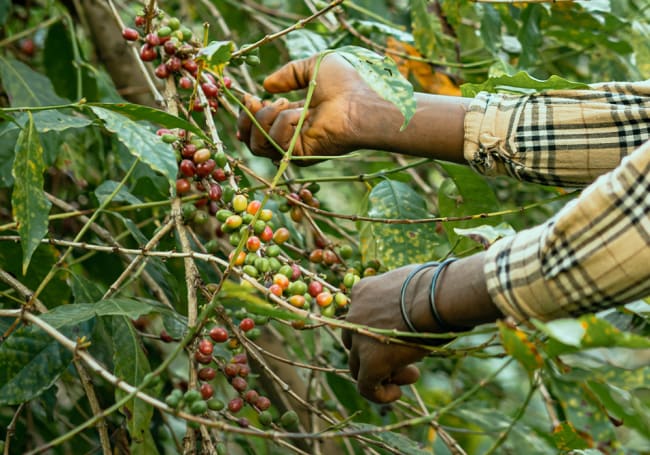
How much harder? Will Corby, our Director of Coffee, has spent 20 years working directly with coffee growers, and his estimate is stark: growers in South America could see yields fall by “30% to 50% as a result of this year’s El Niño”. That’s a huge hit on their income – and, as Will points out, it lands “at a time when coffee farming is impacted by a multitude of price increases”.

And it’s not a small group of people affected. A predicted ‘Super’ El Niño could put global coffee supplies under unprecedented pressure, posing a threat to 50 million smallholder farmers.

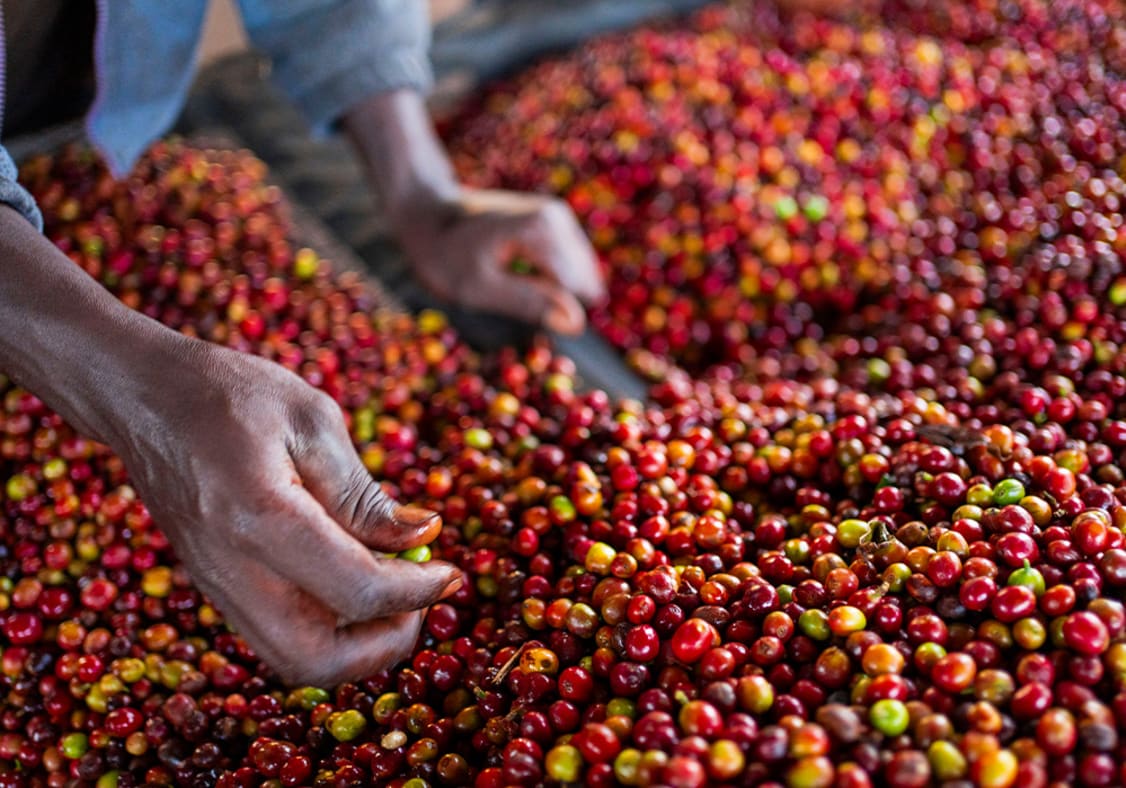
Sorting coffee cherries

Will your coffee get more expensive?

Not necessarily, and not straight away. But smaller harvests mean less coffee to go around, and that usually puts upward pressure on prices further down the line.

Here’s the twist: right now, the opposite is happening. The commodity market – where the vast majority of the world’s coffee is bought and sold – dropped from over $4 to $2.40 per lb of Arabica coffee between December 2025 and June 2026. So the price coffee companies pay for beans has actually fallen sharply, just as growers face one of their toughest harvests in years.

For growers, that’s a double blow – and it exposes something most of us never see when we pick up a bag of coffee. Growers can’t simply sit on their harvest and wait for a better price. 

“When coffee is your main source of income, you can’t really wait for prices to recover before you sell,” Will explains. The result is that many growers end up selling at a loss even in a normal year. Add a tough harvest into the mix, and making ends meet gets harder still.

Why fair trading matters more than ever

This is exactly the moment that separates coffee companies who talk about ethical sourcing from those who practise it. Buying at the lowest price the market allows might look like good business, but the only winner is the trader in the middle.

Coffee companies paid above the cost of production for most of last year, and plenty of them made that work. So the ability to pay fairly clearly exists – the question is whether companies choose to keep doing it now that the market’s dipped. “It’s on us to keep doing right by growers,” Will says, “not just when the market forces our hand.”

Will Corby, Pact's Director of Coffee

What this means for Pact customers

Our approach doesn’t change when the weather does. We’ve always worked directly with the growers and cooperatives behind our coffee – many for over a decade – and we pay a fair price for exceptional quality, whatever the wider market is doing.

That’s not charity – it’s a mutually beneficial partnership. Growers get a reliable, sustainable income that proves there’s a profitable future in growing exceptional coffee. We get first pick of some of the world’s best coffee, year after year, and you get an outstanding cup, without sudden price hikes every time the weather turns.

Those decade-long relationships are what make the difference in a year like this, says Will: they mean Pact “can continue to pay a fair, sustainable price at origin, without passing extra cost on to our customers in tough harvests”.

FAQs

What is a ‘Super’ El Niño?

It’s an unusually strong El Niño event. El Niño warms the world’s oceans and shifts rainfall patterns globally – this year is forecast to be one of the strongest on record.

Will coffee prices go up in 2026 and 2027?

Smaller harvests usually push prices up over time, but not immediately. Right now, commodity coffee prices have actually fallen. The bigger risk is to growers’ incomes – and to supply in the years ahead.

Which coffee regions are most affected by El Niño?

Central and South America typically see drier conditions, while East Africa faces erratic rainfall and flooding. Both reduce yields significantly.

How does Pact protect its coffee prices?

We buy directly from growers through long-term partnerships, paying a fair, sustainable price at origin regardless of the commodity market. That stability protects growers in tough harvests, and it means we’re not passing extra costs on to our customers.

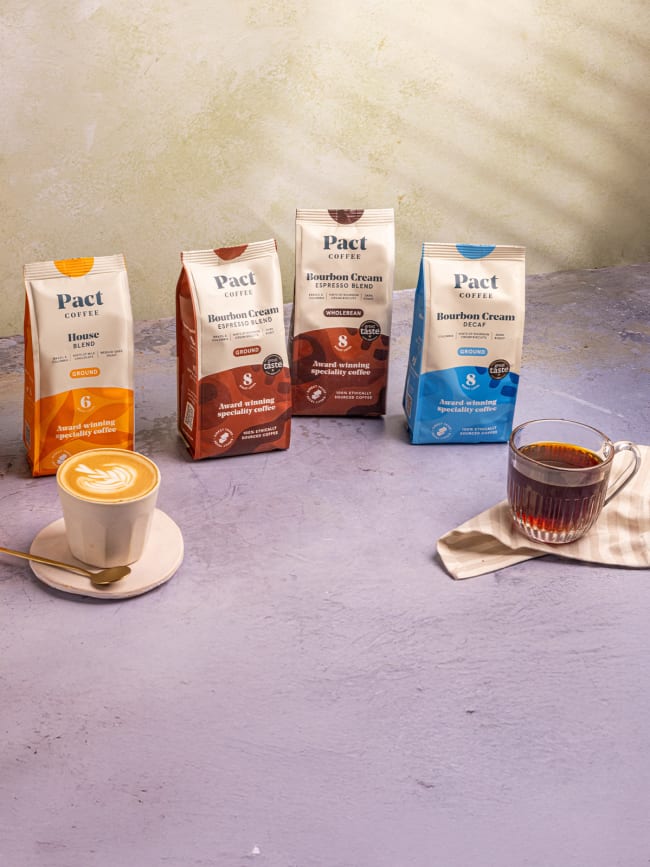
Want coffee that’s traded fairly, whatever the weather? Get 25% off your first two orders in our range of speciality coffees, delivered fresh from our roastery to your door.

What the 'Super' El Niño means for the price of your coffee

Will Sowerby

Written by Will Sowerby

Views

Published - 03 July 2026

Key takeaways

  • Scientists are forecasting one of the strongest El Niño events on record, likely leading to drier weather in Central and South America and heavy, unpredictable rainfall in East Africa.
  • Coffee yields in South America could fall by 30% to 50%, a huge hit for the growers behind your coffee.
  • Smaller harvests usually push coffee prices up over time – but not straight away.
  • Coffee companies with long-term, direct relationships with growers are best placed to protect both growers’ incomes and the price you pay.
  • Pact pays growers a fair, sustainable price regardless of the market, so we’re not passing sudden price hikes onto you.

What is a ‘Super’ El Niño?

El Niño is a natural weather event that warms the world’s oceans and shifts rainfall patterns across the globe. It starts to develop in June, peaks in late autumn and winter, and affects global temperatures well into the following year.

This year’s event is predicted to be a ‘super’ El Niño – scientists are forecasting what could be the strongest in history, potentially leading to record global temperatures in 2027.

For coffee, that’s a serious problem. Coffee trees are famously fussy about their growing conditions, and El Niño disrupts them in the regions where most of the world’s coffee comes from.

How El Niño affects coffee growers

The impact looks different depending on where a coffee is grown. Central and South America typically see much drier conditions, while East Africa is likely to face erratic rainfall and flooding. Both extremes make it far harder to grow a good crop.

How much harder? Will Corby, our Director of Coffee, has spent 20 years working directly with coffee growers, and his estimate is stark: growers in South America could see yields fall by “30% to 50% as a result of this year’s El Niño”. That’s a huge hit on their income – and, as Will points out, it lands “at a time when coffee farming is impacted by a multitude of price increases”.

And it’s not a small group of people affected. A predicted ‘Super’ El Niño could put global coffee supplies under unprecedented pressure, posing a threat to 50 million smallholder farmers.

Sorting coffee cherries

Will your coffee get more expensive?

Not necessarily, and not straight away. But smaller harvests mean less coffee to go around, and that usually puts upward pressure on prices further down the line.

Here’s the twist: right now, the opposite is happening. The commodity market – where the vast majority of the world’s coffee is bought and sold – dropped from over $4 to $2.40 per lb of Arabica coffee between December 2025 and June 2026. So the price coffee companies pay for beans has actually fallen sharply, just as growers face one of their toughest harvests in years.

For growers, that’s a double blow – and it exposes something most of us never see when we pick up a bag of coffee. Growers can’t simply sit on their harvest and wait for a better price. 

“When coffee is your main source of income, you can’t really wait for prices to recover before you sell,” Will explains. The result is that many growers end up selling at a loss even in a normal year. Add a tough harvest into the mix, and making ends meet gets harder still.

Why fair trading matters more than ever

This is exactly the moment that separates coffee companies who talk about ethical sourcing from those who practise it. Buying at the lowest price the market allows might look like good business, but the only winner is the trader in the middle.

Coffee companies paid above the cost of production for most of last year, and plenty of them made that work. So the ability to pay fairly clearly exists – the question is whether companies choose to keep doing it now that the market’s dipped. “It’s on us to keep doing right by growers,” Will says, “not just when the market forces our hand.”

Will Corby, Pact's Director of Coffee

What this means for Pact customers

Our approach doesn’t change when the weather does. We’ve always worked directly with the growers and cooperatives behind our coffee – many for over a decade – and we pay a fair price for exceptional quality, whatever the wider market is doing.

That’s not charity – it’s a mutually beneficial partnership. Growers get a reliable, sustainable income that proves there’s a profitable future in growing exceptional coffee. We get first pick of some of the world’s best coffee, year after year, and you get an outstanding cup, without sudden price hikes every time the weather turns.

Those decade-long relationships are what make the difference in a year like this, says Will: they mean Pact “can continue to pay a fair, sustainable price at origin, without passing extra cost on to our customers in tough harvests”.

FAQs

What is a ‘Super’ El Niño?

It’s an unusually strong El Niño event. El Niño warms the world’s oceans and shifts rainfall patterns globally – this year is forecast to be one of the strongest on record.

Will coffee prices go up in 2026 and 2027?

Smaller harvests usually push prices up over time, but not immediately. Right now, commodity coffee prices have actually fallen. The bigger risk is to growers’ incomes – and to supply in the years ahead.

Which coffee regions are most affected by El Niño?

Central and South America typically see drier conditions, while East Africa faces erratic rainfall and flooding. Both reduce yields significantly.

How does Pact protect its coffee prices?

We buy directly from growers through long-term partnerships, paying a fair, sustainable price at origin regardless of the commodity market. That stability protects growers in tough harvests, and it means we’re not passing extra costs on to our customers.

Want coffee that’s traded fairly, whatever the weather? Get 25% off your first two orders in our range of speciality coffees, delivered fresh from our roastery to your door.