
Key takeaways
- The best coffee beans for espresso are freshly roasted, high-quality Arabica beans – typically medium to dark roast, but not always.
- 85% of consumers say ‘flavour profile’ is the primary way they recognise quality coffee (Allegra Coffee at Home Report 2025)
- 79% of consumers link freshness directly to quality – buy recently roasted beans and use within a few weeks.
- Grinding fresh unlocks significantly more aroma and sweetness. 80% of industry professionals recommend electric grinders.
- Espresso rewards balance – look for notes like chocolate, nuts, caramel, or ripe fruit.
- Better beans will improve your espresso more than upgrading your machine.
Why your beans matter more than your machine
There’s a temptation to focus on hardware – the polished chrome, the pressure gauges, the ritual. And the UK espresso machine is rightly booming, reaching £51.5 million in sales with 9.9% growth, the fastest of any coffee category (Allegra Coffee at Home Report 2025).
But the truth is that your espresso is only as good as your beans.
Even the best machine can’t rescue stale or poorly roasted coffee. But, great beans – fresh, well-sourced, and properly roasted – can elevate even a modest setup. Espresso machine owners report the highest home-brewing satisfaction levels of any brewing method, at 86%. The foundation of that experience is always the coffee itself.
What makes the best coffee beans for espresso?
Freshness
Coffee is an agricultural product. It fades. After roasting, beans begin losing their aromatic compounds – the things that make espresso taste rich, sweet, and complex. That’s why 79% of consumers directly associate freshness with quality (Allegra 2025).
What to look for:
- A clear roast date (not just a best-before date).
- Beans used within two-to-four weeks of roasting.
- Airtight storage at home.
At Pact, we roast to order and deliver your coffee the next day, making our coffee subscription one of the most reliable ways to guarantee freshness at home.
100% Arabica
41% of consumers consider 100% Arabica an important quality marker – and for good reason. Arabica beans typically deliver more nuanced flavour, greater sweetness, and less bitterness than Robusta, as found in a 2022 consumer study.
That said, origin, altitude, processing, and roasting all shape what ends up in your cup. Arabica is the best baseline, not the whole story.
Roast profile
Espresso demands intensity and pressure. Traditionally, that’s meant darker roasts – but modern espresso culture has shifted…
Medium-dark roast
Chocolatey, nutty, low acidity – best for a classic espresso.
Medium
Balanced, slightly fruity – a modern espresso style.
Light
Bright, complex, sharp – best for more advanced espresso machine setups
There’s no single correct answer. The best roast depends on your taste – but balance is always key.
Flavour profile
According to Allegra, 85% of consumers say flavour profile defines coffee quality. For espresso, look for flavours like:
- Chocolate or cocoa.
- Caramel or brown sugar.
- Hazelnut or almond.
- Ripe fruits (berries, stone fruit).
Avoid extremes. Overly sour or aggressively bitter coffees are harder to dial in and less forgiving on home espresso machines.
Wholebean vs pre-ground
In the UK, 45% of households buy ground coffee and only 29% buy wholebean – but among industry professionals, the preference is clear: 80% recommend electric grinders.
Grinding releases volatile aromatic compounds immediately. Pre-ground coffee loses these within minutes. If you make one upgrade to your espresso routine – that will give me you biggest, most delicious upgrade to your coffee instantly – switching to wholebeans and a decent grinder is it.
The best types of coffee beans for espresso
Blends vs single origin
Blends are designed for consistency. They typically combine a chocolatey base with subtle fruit notes and are easier to dial in – making them the reliable choice for most home espresso setups.
Single-origin espressos are more expensive as they highlight more of the unique characteristics of a specific farm or region. They can be extraordinary in espresso, but require more dialling in. They’re exceptionally rewarding, though, if you enjoy experimenting.
Pact Coffee’s expertly curated coffee range covers both, with clear, natural tasting notes to help you choose your favoured profile.
Best origins for espresso
Some origins are particularly well-suited to espresso brewing:
Brazil
Chocolate, nuts, low acidity – grows at lower altitude producing soft, sweet beans that are forgiving to extract and form the backbone of most classic blends.
Colombia
Balanced, caramel sweetness – high-altitude growing (1,500-2,000m) creates dense, well-structured beans that pull cleanly and cut through milk.
Guatemala
Cocoa, spice, good structure – volcanic soil and high elevation produce dense beans with a firm body and complexity that hold up well under pressure.
Honduras
Caramel sweetness, chocolate depth, syrupy body – strictly high grown beans develop slowly in cool mountain climates, building the rich sugars and density that espresso rewards.
How to choose the right espresso beans for you
Start with flavour, not trends
Ask yourself, do you prefer chocolatey, comforting espressos? Or something brighter and fruitier? Your palate matters more than any ‘best’ list.
Match beans to your setup
Entry-level machines are most forgiving with medium-dark blends. More advanced machines give you room to experiment with lighter roasts and single origins.
Buy less, more often
Freshness always beats bulk buying. A rolling subscription is the most practical solution.
How to store espresso beans
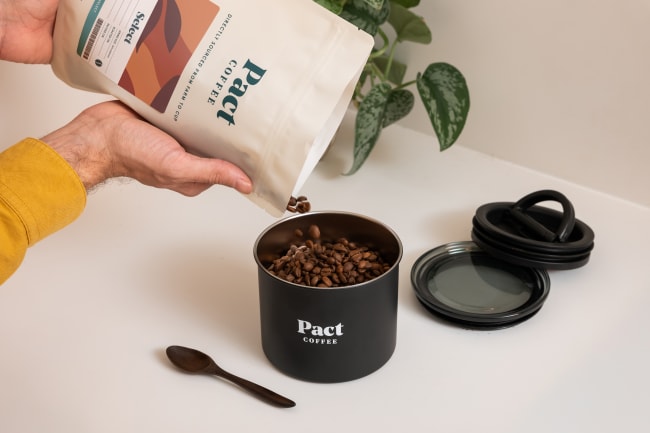
Coffee has four enemies: oxygen, light, heat, and moisture. A proper airtight container protects against all of them.
Why it matters:
- It keeps flavours fresher for longer.
- It reduces waste.
- It keeps your coffee tasting consistent.
Pair this with freshly roasted beans from Pact Coffee, and you’re maximising quality at every step.
FAQs
What are the best coffee beans for espresso machines?
Freshly roasted, 100% Arabica beans with a medium to dark roast profile and balanced flavour notes – think chocolate, caramel, or ripe fruit. Pact Coffee’s House Espresso, Fruit & Nut Espresso, Tutti Frutti Espresso, and Bourbon Cream Espresso are fantastic options that cater for espresso setups of all levels.
Can you use any coffee beans for espresso?
Technically, yes. But not all beans perform well. Espresso extracts intensely, so beans that are too light or unevenly roasted can taste harsh or unbalanced.
Are dark roast beans always best for espresso?
Not anymore. Many modern espresso styles use medium roasts for better sweetness and complexity. It depends on your taste and machine.
How fresh should espresso beans be?
Ideally, within two-to-four weeks of the roast date. Always look for a roast date, not just a best before.
Should I buy wholebean or ground coffee for espresso?
Wholeban, without question. Grinding fresh – ideally with an electric burr grinder – preserves the aroma and sweetness that make espresso shine.
How much should I spend on espresso beans?
Quality doesn’t require a large budget. With UK households averaging £6.42 per week on home coffee, a subscription like Pact Coffee’s offers strong quality, value, and diversity of flavour profiles without overspending.