What is the best coffee grinder to buy? What is the best coffee grinder to buy? Coffee break reading
Coffee break reading

What is the best coffee grinder to buy?

Pact Coffee

Written by Pact Coffee / Views

Published - 20 April 2026

Key takeaways

  • The best coffee grinder for most people is a burr grinder, not a blade grinder – it delivers consistent grind size and better flavour.
  • Choose electric grinders for convenience and speed, or manual grinders for portability and low cost.
  • Make sure your grinder grinds for the brewing methods you need – fine for espresso, coarse for cafetière.
  • Freshly grinding beans will dramatically improve taste – it’s the very best upgrade you can make at home.
  • An electric burr coffee grinder offers the best balance of quality, price, and ease.

You buy better beans. You follow a recipe. You measure, pour, and wait. And still, it doesn’t taste quite like the coffee you had in the coffee shop.

Does this sound familiar?

The key to the best coffee at home isn’t a machine. It’s grinding coffee beans fresh. In fact, 79% of home coffee drinkers believe freshness is important in high-quality coffee (Allegra ‘Coffee at Home Report’ 2025).

Grinding fresh changes everything. It gives you full control over how fast or slow the water goes through the coffee. It decides how flavours are released, how balanced your coffee tastes, and how close you can get to what the roaster and grower intended.

So, if you’re asking yourself what the best coffee grinder is, you’re asking the right questions. You’re on the path to much better coffee.

The guide is here to answer that and help you find the right answers. 

Why your grinder matters more than you think

You can have the best beans in the world and still end up with an underwhelming cup. This is usually down to the grind.

Coffee flavour is extracted through contact between water and ground coffee. If your grind size is uneven – or ground for a completely different brewing method – your extraction will be unbalanced, bitter, or sour. A confused, muddy cup.

A good coffee bean grinder solves this problem.

What is the best coffee grinder type?

If you’re searching for the best coffee grinder, this is the first decision…

Do you want a burr or blade grinder?

Blade grinders

  • Chop beans unevenly.
  • Create heat (which damages flavour).
  • Cheap, but inconsistent.

Burr grinders

  • Crush beans between two burrs.
  • Deliver uniform particle size.
  • Preserve flavour and aroma.

Burr grinders are universally better. So, if you’re after better taste in your morning brew, this isn’t a close contest.

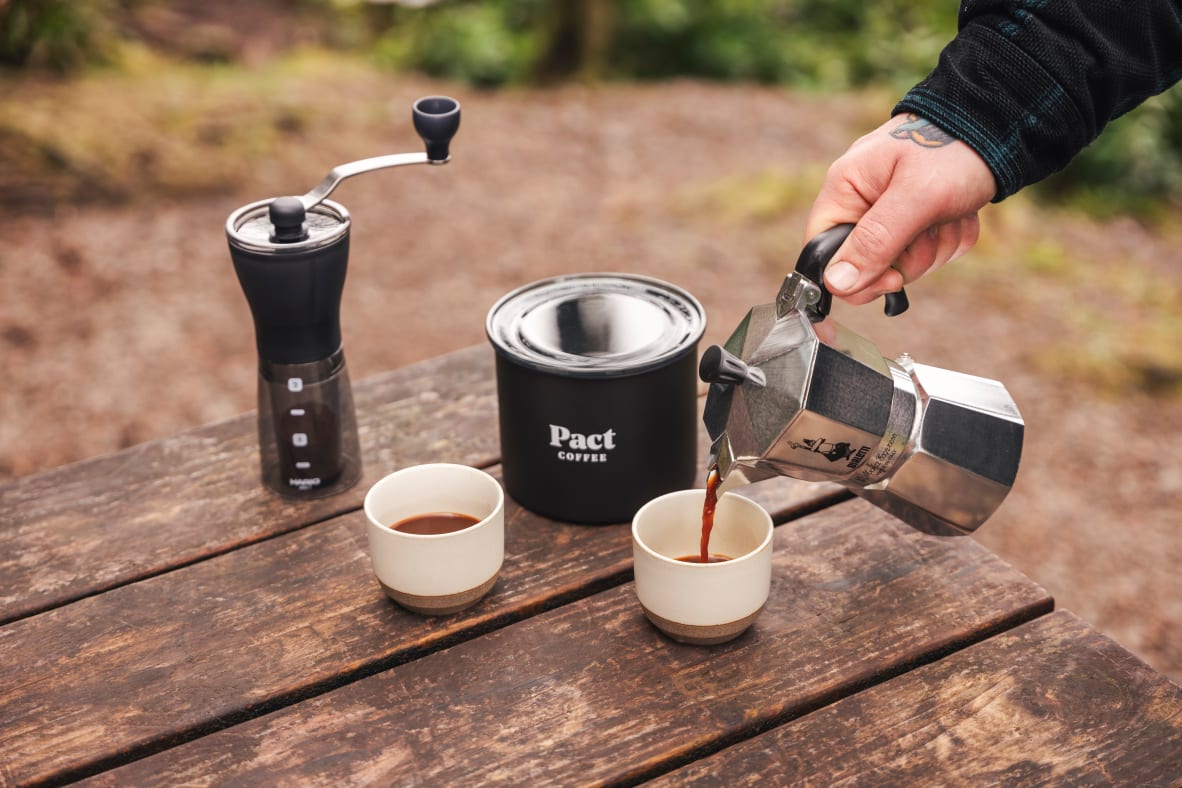
A hand grinder offers a more ‘hands-on’ approach and is perfect for those who love brewing freshly ground coffee out in the wild.

Electric vs manual grinders

The next decision you want to make is why you want to use it, and how often.

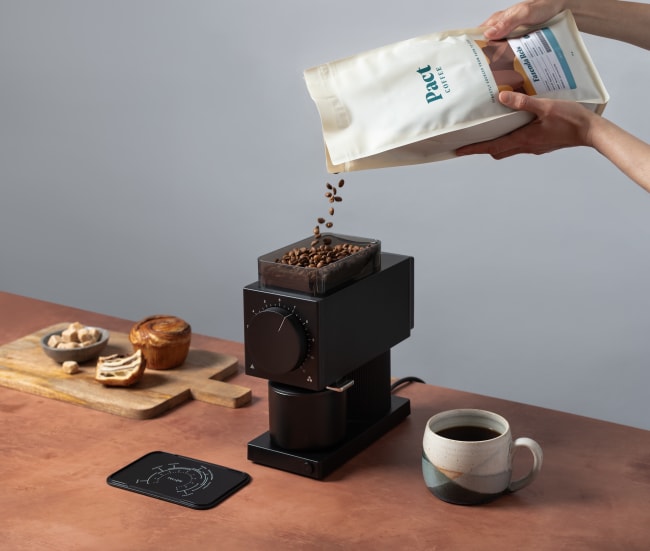
Electric coffee grinders

  • Fast and effortless.
  • Ideal for daily use.
  • Better for espresso and fine adjustments.

Manual coffee grinders

  • Portable and quiet.
  • More affordable.
  • Slower, but satisfying to use.

There’s some good data for this debate. 

An electric grinder is the top accessory recommended by industry leaders, with 80% citing it as a priority. And stats reflect this with 29.3% of households owning an electric grinder, compared to 7.6% for manual (Allegra ‘Coffee at Home Report’ 2025).

But, while stats tend to favour electric grinders, really, this decision is more down to personal preference. 

Electric grinders are much more expensive, which can put many people off. A lot of people also prefer the ‘hands-on’ approach of a manual grinder – not to mention those who love brewing freshly ground coffee out in the wild.

So long as it’s a burr grinder, you’ll be making massive progress, no matter whether you go electric or manual.

Choosing the right grinder based on your brewing method

Different brewing methods need different grind sizes in order to get the best results. So, it’s worth making sure the grinder you choose is built to grind your preferred method. Here’s a guide on grind size…

Cafetière (French press)

  • Immersion brewing.
  • Fuller body, more texture.
  • Works beautifully with chocolatey, nutty coffees.
  • Less precision required, but still benefits from burr consistency.

Espresso machine

  • High-pressure extraction.
  • Concentrated flavour.
  • Ideal for bold, balanced blends.
  • Requires a high-quality burr grinder with micro-adjustments.

Pour-over/filter 

  • Controlled, precise.
  • Highlights clarity and origin.
  • Perfect for medium or lighter roasts.
  • Requires adjustments and benefits from burr consistency.

AeroPress

  • Versatile and forgiving.
  • Can mimic espresso or filter.
  • Great for experimentation.
  • Requires finer adjustments and benefits from burr consistency.

As a general rule of thumb, the more precise your brew method, the more precise your grinder needs to be. If you only brew espresso, an electric grinder might be best – but for filter, either will work well.

Are coffee machines with built-in grinders worth it?

A coffee machine with a grinder (often called a bean-to-cup machine) offers the convenience of ‘grind, brew, done’.

Pros

  • Minimal effort.
  • Consistent routine.
  • Great for busy mornings.

Cons

  • Less control over grind size.
  • Harder to clean and maintain.
  • Often lower grind quality than a standalone grinder (compensated for by convenience).

With 56% of Brits now owning a coffee machine, the rise of all-in-one setups makes sense. But if flavour is your priority, a separate grinder will give you more control and better results over the long run.

Why are more people buying grinders?

The shift towards home coffee started during COVID, but it’s become a much larger cultural shift since. 

  • 53% of people now say they’ve cut back on coffee shop visits.
  • The average price of a takeaway coffee has risen by 17% since 2022.
  • 29.3% of households now buy whole beans, which require grinding (Allegra ‘Coffee at Home Report’ 2025).

There’s a mindset shift happening of buy once, brew better.

And people who have tried to recreate cafe-quality coffee at home are more likely to invest in a grinder (34.2%) than those who haven’t (22.6%) (Allegra ‘Coffee at Home Report’ 2025).

How to choose the best coffee grinder for you

A good approach to take is to consider ‘what’s the best for your lifestyle’.

  1. Your brew method
    Espresso drinkers need precision. Filter drinkers need consistency. French press drinkers need simplicity.
  2. Your routine
    If you’re brewing every morning before work, electric wins. But if you have housemates, a manual is most agreeable.
  3. Your space
    Manual grinders take up much less room than electric grinders – but if you have space on the countertop, or a designated coffee area, electric is a fantastic option.
  4. Your budget
    A good grinder doesn’t need to be expensive – but it should be the best you can reasonably afford. It will elevate every cup you make.

How to clean a coffee grinder

A clean grinder is always a better grinder. Oils from coffee beans build up over time, dulling flavours over time.

Quick clean (weekly)

  • Empty the hopper.
  • Brush our loose grounds.
  • Wipe exterior.

Deep clean (monthly)

  • Disassemble removable parts.
  • Use a grinder cleaning product or dry rice (sparingly).
  • Wipe burrs with a dry cloth.

What to avoid

  • Water inside the grinder.
  • Soap on burrs.
  • Ignoring buildup. 

How to make the most of your grinder

Buying the right grinder is perhaps the most important step you can take in home brewing. But there’s more you can do to make the most of it…

  • Grind fresh, just before brewing.
  • Store beans in an airtight container, away from light and heat.
  • Adjust grind size gradually – small changes make a big difference.

You can explore different roast profiles with freshly roasted beans from Pact. 

You can also explore different brewing methods through step-by-step guides here.

FAQs

What is the best coffee grinder for beginners?

If you’re brewing espresso, a mid-range electric burr grinder is the best starting point. If you’re brewing with a filter, then a manual hand grinder will work wonders.

Are expensive coffee grinders worth it?

Up to a point, yes. The difference between a cheap blade grinder and a mid-range electric burr grinder is incredible – but the more expensive you go, the more nuanced the improvements will be. So always do your research to make sure you know an expensive grinder is definitely worth it.

Can I use one grinder for all brewing methods?

For the most part, yes. A lot of grinders (electric and manual) will have adjustable grind settings. But some grinders are only built for grinding for filter coffee, and won’t grind fine enough for an espresso.

Is a manual coffee grinder good enough?

Absolutely. Especially for filter coffee and travelling. It just requires a bit more time and effort – but that in itself can bring its own rewards.

How often should I clean my coffee grinder?

Light clean weekly. Deep clean monthly. But do it more often if you use oily beans (darker roasts).

What is the best coffee grinder to buy?

Pact Coffee

Written by Pact Coffee

Views

Published - 20 April 2026

Key takeaways

  • The best coffee grinder for most people is a burr grinder, not a blade grinder – it delivers consistent grind size and better flavour.
  • Choose electric grinders for convenience and speed, or manual grinders for portability and low cost.
  • Make sure your grinder grinds for the brewing methods you need – fine for espresso, coarse for cafetière.
  • Freshly grinding beans will dramatically improve taste – it’s the very best upgrade you can make at home.
  • An electric burr coffee grinder offers the best balance of quality, price, and ease.

You buy better beans. You follow a recipe. You measure, pour, and wait. And still, it doesn’t taste quite like the coffee you had in the coffee shop.

Does this sound familiar?

The key to the best coffee at home isn’t a machine. It’s grinding coffee beans fresh. In fact, 79% of home coffee drinkers believe freshness is important in high-quality coffee (Allegra ‘Coffee at Home Report’ 2025).

Grinding fresh changes everything. It gives you full control over how fast or slow the water goes through the coffee. It decides how flavours are released, how balanced your coffee tastes, and how close you can get to what the roaster and grower intended.

So, if you’re asking yourself what the best coffee grinder is, you’re asking the right questions. You’re on the path to much better coffee.

The guide is here to answer that and help you find the right answers. 

Why your grinder matters more than you think

You can have the best beans in the world and still end up with an underwhelming cup. This is usually down to the grind.

Coffee flavour is extracted through contact between water and ground coffee. If your grind size is uneven – or ground for a completely different brewing method – your extraction will be unbalanced, bitter, or sour. A confused, muddy cup.

A good coffee bean grinder solves this problem.

What is the best coffee grinder type?

If you’re searching for the best coffee grinder, this is the first decision…

Do you want a burr or blade grinder?

Blade grinders

  • Chop beans unevenly.
  • Create heat (which damages flavour).
  • Cheap, but inconsistent.

Burr grinders

  • Crush beans between two burrs.
  • Deliver uniform particle size.
  • Preserve flavour and aroma.

Burr grinders are universally better. So, if you’re after better taste in your morning brew, this isn’t a close contest.

A hand grinder offers a more ‘hands-on’ approach and is perfect for those who love brewing freshly ground coffee out in the wild.

Electric vs manual grinders

The next decision you want to make is why you want to use it, and how often.

Electric coffee grinders

  • Fast and effortless.
  • Ideal for daily use.
  • Better for espresso and fine adjustments.

Manual coffee grinders

  • Portable and quiet.
  • More affordable.
  • Slower, but satisfying to use.

There’s some good data for this debate. 

An electric grinder is the top accessory recommended by industry leaders, with 80% citing it as a priority. And stats reflect this with 29.3% of households owning an electric grinder, compared to 7.6% for manual (Allegra ‘Coffee at Home Report’ 2025).

But, while stats tend to favour electric grinders, really, this decision is more down to personal preference. 

Electric grinders are much more expensive, which can put many people off. A lot of people also prefer the ‘hands-on’ approach of a manual grinder – not to mention those who love brewing freshly ground coffee out in the wild.

So long as it’s a burr grinder, you’ll be making massive progress, no matter whether you go electric or manual.

Choosing the right grinder based on your brewing method

Different brewing methods need different grind sizes in order to get the best results. So, it’s worth making sure the grinder you choose is built to grind your preferred method. Here’s a guide on grind size…

Cafetière (French press)

  • Immersion brewing.
  • Fuller body, more texture.
  • Works beautifully with chocolatey, nutty coffees.
  • Less precision required, but still benefits from burr consistency.

Espresso machine

  • High-pressure extraction.
  • Concentrated flavour.
  • Ideal for bold, balanced blends.
  • Requires a high-quality burr grinder with micro-adjustments.

Pour-over/filter 

  • Controlled, precise.
  • Highlights clarity and origin.
  • Perfect for medium or lighter roasts.
  • Requires adjustments and benefits from burr consistency.

AeroPress

  • Versatile and forgiving.
  • Can mimic espresso or filter.
  • Great for experimentation.
  • Requires finer adjustments and benefits from burr consistency.

As a general rule of thumb, the more precise your brew method, the more precise your grinder needs to be. If you only brew espresso, an electric grinder might be best – but for filter, either will work well.

Are coffee machines with built-in grinders worth it?

A coffee machine with a grinder (often called a bean-to-cup machine) offers the convenience of ‘grind, brew, done’.

Pros

  • Minimal effort.
  • Consistent routine.
  • Great for busy mornings.

Cons

  • Less control over grind size.
  • Harder to clean and maintain.
  • Often lower grind quality than a standalone grinder (compensated for by convenience).

With 56% of Brits now owning a coffee machine, the rise of all-in-one setups makes sense. But if flavour is your priority, a separate grinder will give you more control and better results over the long run.

Why are more people buying grinders?

The shift towards home coffee started during COVID, but it’s become a much larger cultural shift since. 

  • 53% of people now say they’ve cut back on coffee shop visits.
  • The average price of a takeaway coffee has risen by 17% since 2022.
  • 29.3% of households now buy whole beans, which require grinding (Allegra ‘Coffee at Home Report’ 2025).

There’s a mindset shift happening of buy once, brew better.

And people who have tried to recreate cafe-quality coffee at home are more likely to invest in a grinder (34.2%) than those who haven’t (22.6%) (Allegra ‘Coffee at Home Report’ 2025).

How to choose the best coffee grinder for you

A good approach to take is to consider ‘what’s the best for your lifestyle’.

  1. Your brew method
    Espresso drinkers need precision. Filter drinkers need consistency. French press drinkers need simplicity.
  2. Your routine
    If you’re brewing every morning before work, electric wins. But if you have housemates, a manual is most agreeable.
  3. Your space
    Manual grinders take up much less room than electric grinders – but if you have space on the countertop, or a designated coffee area, electric is a fantastic option.
  4. Your budget
    A good grinder doesn’t need to be expensive – but it should be the best you can reasonably afford. It will elevate every cup you make.

How to clean a coffee grinder

A clean grinder is always a better grinder. Oils from coffee beans build up over time, dulling flavours over time.

Quick clean (weekly)

  • Empty the hopper.
  • Brush our loose grounds.
  • Wipe exterior.

Deep clean (monthly)

  • Disassemble removable parts.
  • Use a grinder cleaning product or dry rice (sparingly).
  • Wipe burrs with a dry cloth.

What to avoid

  • Water inside the grinder.
  • Soap on burrs.
  • Ignoring buildup. 

How to make the most of your grinder

Buying the right grinder is perhaps the most important step you can take in home brewing. But there’s more you can do to make the most of it…

  • Grind fresh, just before brewing.
  • Store beans in an airtight container, away from light and heat.
  • Adjust grind size gradually – small changes make a big difference.

You can explore different roast profiles with freshly roasted beans from Pact. 

You can also explore different brewing methods through step-by-step guides here.

FAQs

What is the best coffee grinder for beginners?

If you’re brewing espresso, a mid-range electric burr grinder is the best starting point. If you’re brewing with a filter, then a manual hand grinder will work wonders.

Are expensive coffee grinders worth it?

Up to a point, yes. The difference between a cheap blade grinder and a mid-range electric burr grinder is incredible – but the more expensive you go, the more nuanced the improvements will be. So always do your research to make sure you know an expensive grinder is definitely worth it.

Can I use one grinder for all brewing methods?

For the most part, yes. A lot of grinders (electric and manual) will have adjustable grind settings. But some grinders are only built for grinding for filter coffee, and won’t grind fine enough for an espresso.

Is a manual coffee grinder good enough?

Absolutely. Especially for filter coffee and travelling. It just requires a bit more time and effort – but that in itself can bring its own rewards.

How often should I clean my coffee grinder?

Light clean weekly. Deep clean monthly. But do it more often if you use oily beans (darker roasts).