What is light roast coffee? What is light roast coffee? Did you know
Did you know

What is light roast coffee?

Will Sowerby

Written by Will Sowerby / Views

Published - 24 June 2026

Key takeaways

  • Light roast coffee is roasted for a shorter time at a lower temperature, preserving the natural flavours of the bean.
  • It typically has higher acidity, a lighter body, and more complex, fruity, or floral tasting notes than darker roasts.
  • Contrary to popular belief, light roast coffee contains slightly more caffeine than dark roast, because the roasting process breaks down caffeine over time.
  • The origin, variety, and processing method of the bean matters far more in a light roast – there’s nowhere to hide, so quality is everything.
  • At Pact, we roast lighter than most, because we believe great coffee should taste like where it came from.

So, what is light roast coffee? It’s one of those questions that seems simple on the surface – but the answer tells you a lot about how coffee works, and why the roast profile you choose matters so much.

Whether you’re new to speciality coffee or you’ve been brewing at home for years, this guide covers everything you need to know about light roast: what it is, how it differs from darker roasts, and why it might just be the best way to experience truly exceptional coffee.

What is light roast coffee, exactly?

What is a light roast coffee? In short, it’s coffee that’s been roasted at a lower temperature – typically between 180°C and 205°C – and removed from the roaster before or just at the ‘first crack’. That’s the point at which the beans expand and release steam with an audible popping sound, a bit like popcorn.

Because the beans spend less time in the roaster, they retain more of their original character. The moisture stays higher, the density remains, and the natural sugars don’t fully caramelise. The result is a coffee with a lighter colour, a more delicate body, and – most importantly – a flavour profile that reflects where the bean came from.

That could mean bright citrus notes from the high-altitude hills of Huila, Colombia, or a subtle stone-fruit sweetness from a Kenyan single-origin. These flavours exist in the bean itself. Light roasting is how you let them speak.

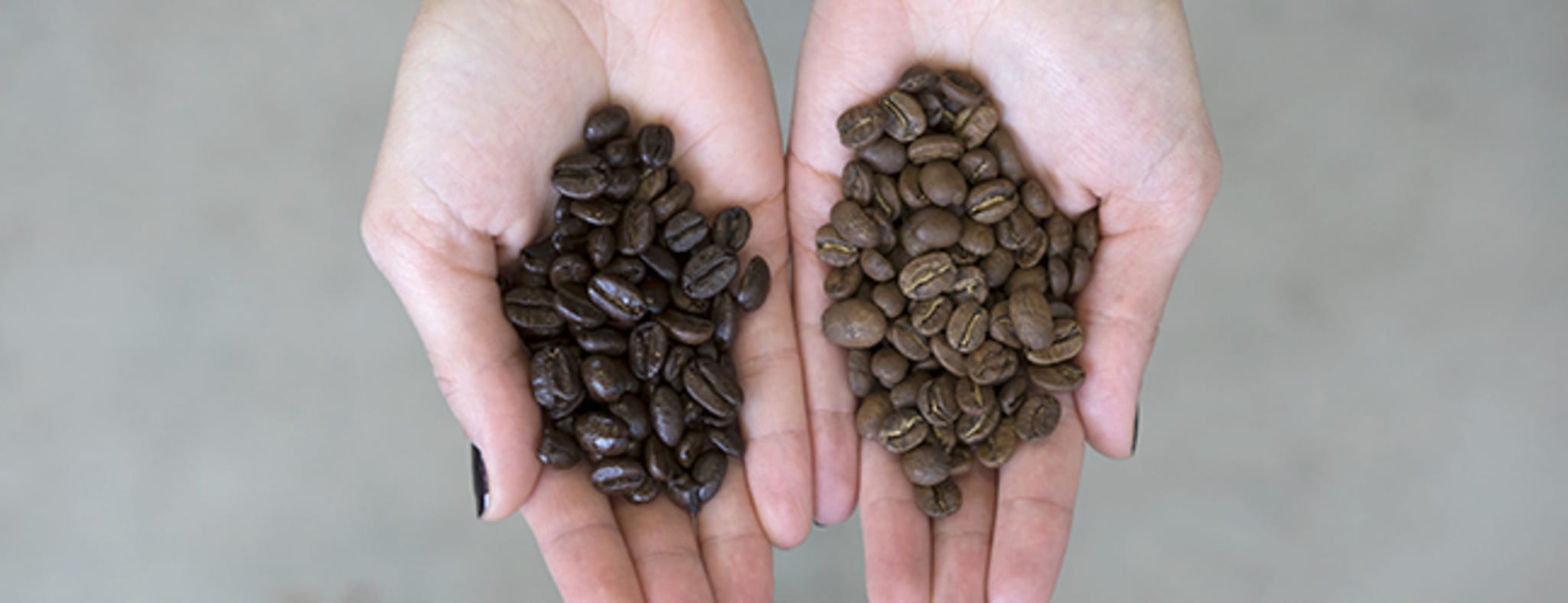
The difference between a supermarket dark roast (left) and Pact's dark roast (right).

What does light roast coffee taste like?

Light roast coffee tends to be:

  • Higher in acidity. This isn’t unpleasant sharpness – it’s the same bright, clean quality you’d find in a great wine or fresh fruit. It’s what makes light roast feel lively and complex.
  • Lower in body. Light roasts have a thinner, tea-like mouthfeel compared to the heavier, syrupy texture of a dark roast. Some people love this – others prefer something more substantial.
  • More flavourful and nuanced. Floral, fruity, and delicate notes are far more pronounced. You might taste jasmine, red berries, or a clean sweetness – flavours that simply don’t survive a longer, hotter roast.
  • Less bitter. The bitterness associated with coffee is largely a product of the roasting process itself. Lighter roasts haven’t developed that intensity, so they’re often perceived as gentler and more approachable.

No two light roasts are identical. The flavour depends enormously on the coffee’s origin, the variety of the coffee, how the beans were processed after picking, and how they were brewed. That’s what makes speciality coffee so endlessly interesting.

What is the difference between light and dark roast coffee?

This is one of the most common questions we hear, and it’s worth spending a moment on – because the difference goes deeper than colour.

Roasting time and temperature

Light roasts are pulled from the heat earlier. Dark roasts go further – to or beyond the second crack, in many cases – reaching temperatures of 224°C or above. The longer the bean stays in the roaster, the more it transforms.

Flavour

In a light roast, you’re tasting the bean. In a dark roast, you’re largely tasting the roast. The extended heat breaks down the delicate compounds responsible for origin character, replacing them with the roasty, smoky, bitter flavours we often associate with traditional espresso. Neither is wrong – it’s simply a different experience.

At Pact, we believe the most interesting flavours live in the bean itself. That’s why we roast lighter than most. We work directly with the world’s best growers to source exceptional coffee, and then we roast it in a way that preserves everything those growers have worked so hard to develop.

Body and acidity

Light roasts are higher in acidity and lighter in body. Dark roasts have lower acidity and a heavier, bolder mouthfeel. If you’re used to dark roast and switching to light, the difference can feel surprising at first – but many people find they come to prefer the clarity of a well-roasted light coffee.

Caffeine

Here’s the one that surprises most people. Light roast coffee is marginally higher in caffeine than dark roast. That’s because caffeine breaks down during roasting, so the shorter the roast, the more caffeine remains in the bean. The difference isn’t dramatic, but it’s worth knowing.

Colour

Light roast beans are pale brown – almost cinnamon-coloured – with no visible oil on the surface. The darkest roasted beans are nearly black and noticeably oily. Medium roast sits somewhere in between.

“Chemists working with coffee have determined that around 10% of green coffee’s weight is comprised of organic acids, that’s quite a lot!”

“Thousands of flavour creating reactions occur during the roasting process, and it’s our job to find an expression of that coffee which showcases vibrancy and terroir while still being soluble and approachable to brew.”

Richard Hill, Pact Coffee Quality Manager who has ten years of experience roasting coffee.

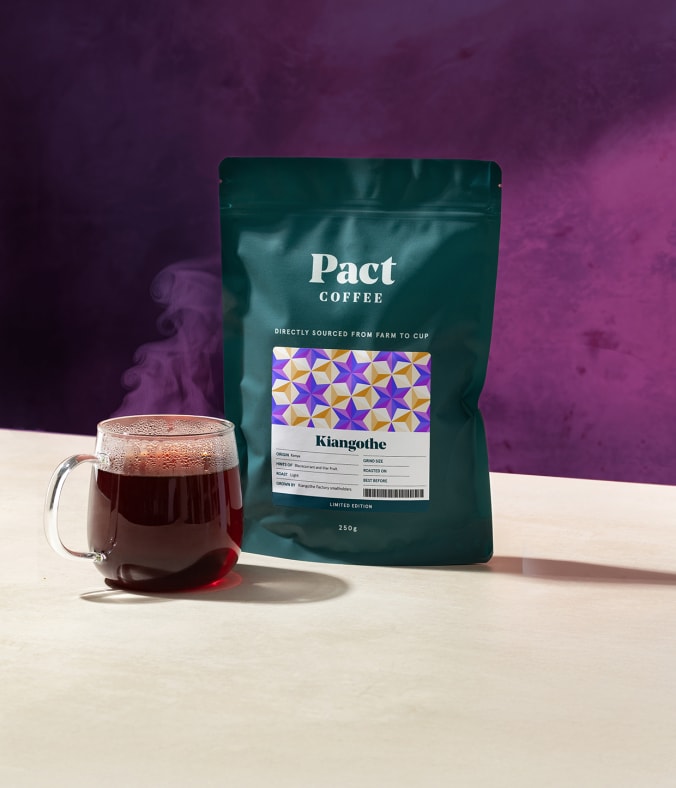
Kiangothe, a limited edition light roasted by Pact in June 2026

Why does roast level matter so much?

When you’re buying commodity coffee, roast level is often used to create consistency – or to disguise lower-quality beans behind a wall of smokiness. A heavily darkened roast will always taste roughly the same, regardless of where the beans came from.

In speciality coffee, that would be a waste. The beans we source at Pact are grown by skilled growers who take real pride in their craft. The terroir – the combination of soil, climate, altitude, and processing method – creates flavour profiles you simply can’t replicate. Roasting too darkly would destroy all of that.

Roasting lighter is harder to do well. There’s less room for error, and nowhere to hide. But when it’s done right, the results are extraordinary – a coffee that tastes unmistakably like the place it came from, and like nothing else you’ve ever had.

How should you brew light roast coffee?

Light roast coffee tends to perform particularly well with brewing methods that emphasise clarity and nuance. Filter methods – like a V60, cafetière, or AeroPress – highlight the complex, delicate notes that make light roasts special.

You can also pull a great espresso from a light roast – it’ll be brighter and more complex than you might expect, creating truly amazing flavours (think fruity iced cream) with milk.

A few tips:

  • Grind fresh. Light roast beans are denser, so they benefit especially from freshly ground coffee. Pre-ground loses its character quickly.
  • Use slightly hotter water. Water just off the boil (around 93–96°C) helps with extraction.
  • Be patient. Light roasts can be slightly slower to extract. Don’t rush it.

Is light roast coffee right for you?

If you’re curious about where your coffee actually comes from – if you want to taste the difference between a Rwandan natural and a washed coffee from Congo, or understand what ‘terroir’ really means in a cup – then light roast is your gateway.

It won’t taste like the coffee you grew up with. It’s brighter, more delicate, and sometimes surprising. But for coffee lovers who want more from every cup, it’s hard to go back.

At Pact, every coffee we roast starts with sourcing the finest beans we can find from the world’s best growers. The roast is just the final chapter in a long story of craft and care. We roast light to honour that story – not to hide it.

Start a Pact light roast subscription here and get 25% off your first two orders.

FAQs

Is light roast coffee stronger than dark roast?

It depends what you mean by ‘stronger’. Light roast has slightly more caffeine, because the roasting process breaks down caffeine over time. But if by stronger you mean bolder or more intense in flavour, dark roast tends to taste that way – it’s roastier, more bitter, and less nuanced. Light roast is more complex and delicate rather than powerful.

Does light roast coffee taste bitter?

Much less so than dark roast. Bitterness is largely a product of the roasting process – the longer and hotter the roast, the more bitter compounds develop. Because light roast coffee spends less time in the roaster, it retains more natural sweetness and acidity, and has far lower bitterness. If you find coffee too bitter, a light roast could be a real revelation.

Can you make espresso with light roast coffee?

Yes, absolutely. It won’t taste like a traditional dark espresso – it’ll be brighter, fruitier, and more acidic – but many people find it far more interesting. It takes a little more care to dial in, but the results can be exceptional.

What’s the best way to brew light roast coffee at home?

The V60, AeroPress, and cafetière all work brilliantly with light roast. These methods preserve the delicate flavours and allow the complexity of the bean to come through clearly. Whatever method you use, grind fresh and aim for water around 93–96°C.

Why does Pact roast lighter than other roasters?

Because we believe the most interesting flavours live in the bean itself. We work directly with the world’s best growers to source exceptional coffee, and roasting lighter is how we preserve the character and complexity that those growers have worked so hard to develop. Roasting too darkly would simply destroy it.

Is light roast coffee more acidic?

Yes – light roast coffee does have higher perceived acidity than darker roasts. This isn’t harsh or unpleasant – it’s the same bright, clean quality you’d find in fresh fruit or a great wine. If you have a sensitive stomach, it’s worth bearing in mind, though cold brew or a slightly lower-temperature brew can help reduce acidity.

What is light roast coffee?

Will Sowerby

Written by Will Sowerby

Views

Published - 24 June 2026

Key takeaways

  • Light roast coffee is roasted for a shorter time at a lower temperature, preserving the natural flavours of the bean.
  • It typically has higher acidity, a lighter body, and more complex, fruity, or floral tasting notes than darker roasts.
  • Contrary to popular belief, light roast coffee contains slightly more caffeine than dark roast, because the roasting process breaks down caffeine over time.
  • The origin, variety, and processing method of the bean matters far more in a light roast – there’s nowhere to hide, so quality is everything.
  • At Pact, we roast lighter than most, because we believe great coffee should taste like where it came from.

So, what is light roast coffee? It’s one of those questions that seems simple on the surface – but the answer tells you a lot about how coffee works, and why the roast profile you choose matters so much.

Whether you’re new to speciality coffee or you’ve been brewing at home for years, this guide covers everything you need to know about light roast: what it is, how it differs from darker roasts, and why it might just be the best way to experience truly exceptional coffee.

What is light roast coffee, exactly?

What is a light roast coffee? In short, it’s coffee that’s been roasted at a lower temperature – typically between 180°C and 205°C – and removed from the roaster before or just at the ‘first crack’. That’s the point at which the beans expand and release steam with an audible popping sound, a bit like popcorn.

Because the beans spend less time in the roaster, they retain more of their original character. The moisture stays higher, the density remains, and the natural sugars don’t fully caramelise. The result is a coffee with a lighter colour, a more delicate body, and – most importantly – a flavour profile that reflects where the bean came from.

That could mean bright citrus notes from the high-altitude hills of Huila, Colombia, or a subtle stone-fruit sweetness from a Kenyan single-origin. These flavours exist in the bean itself. Light roasting is how you let them speak.

The difference between a supermarket dark roast (left) and Pact's dark roast (right).

What does light roast coffee taste like?

Light roast coffee tends to be:

  • Higher in acidity. This isn’t unpleasant sharpness – it’s the same bright, clean quality you’d find in a great wine or fresh fruit. It’s what makes light roast feel lively and complex.
  • Lower in body. Light roasts have a thinner, tea-like mouthfeel compared to the heavier, syrupy texture of a dark roast. Some people love this – others prefer something more substantial.
  • More flavourful and nuanced. Floral, fruity, and delicate notes are far more pronounced. You might taste jasmine, red berries, or a clean sweetness – flavours that simply don’t survive a longer, hotter roast.
  • Less bitter. The bitterness associated with coffee is largely a product of the roasting process itself. Lighter roasts haven’t developed that intensity, so they’re often perceived as gentler and more approachable.

No two light roasts are identical. The flavour depends enormously on the coffee’s origin, the variety of the coffee, how the beans were processed after picking, and how they were brewed. That’s what makes speciality coffee so endlessly interesting.

What is the difference between light and dark roast coffee?

This is one of the most common questions we hear, and it’s worth spending a moment on – because the difference goes deeper than colour.

Roasting time and temperature

Light roasts are pulled from the heat earlier. Dark roasts go further – to or beyond the second crack, in many cases – reaching temperatures of 224°C or above. The longer the bean stays in the roaster, the more it transforms.

Flavour

In a light roast, you’re tasting the bean. In a dark roast, you’re largely tasting the roast. The extended heat breaks down the delicate compounds responsible for origin character, replacing them with the roasty, smoky, bitter flavours we often associate with traditional espresso. Neither is wrong – it’s simply a different experience.

At Pact, we believe the most interesting flavours live in the bean itself. That’s why we roast lighter than most. We work directly with the world’s best growers to source exceptional coffee, and then we roast it in a way that preserves everything those growers have worked so hard to develop.

Body and acidity

Light roasts are higher in acidity and lighter in body. Dark roasts have lower acidity and a heavier, bolder mouthfeel. If you’re used to dark roast and switching to light, the difference can feel surprising at first – but many people find they come to prefer the clarity of a well-roasted light coffee.

Caffeine

Here’s the one that surprises most people. Light roast coffee is marginally higher in caffeine than dark roast. That’s because caffeine breaks down during roasting, so the shorter the roast, the more caffeine remains in the bean. The difference isn’t dramatic, but it’s worth knowing.

Colour

Light roast beans are pale brown – almost cinnamon-coloured – with no visible oil on the surface. The darkest roasted beans are nearly black and noticeably oily. Medium roast sits somewhere in between.

“Chemists working with coffee have determined that around 10% of green coffee’s weight is comprised of organic acids, that’s quite a lot!”

“Thousands of flavour creating reactions occur during the roasting process, and it’s our job to find an expression of that coffee which showcases vibrancy and terroir while still being soluble and approachable to brew.”

Richard Hill, Pact Coffee Quality Manager who has ten years of experience roasting coffee.

Kiangothe, a limited edition light roasted by Pact in June 2026

Why does roast level matter so much?

When you’re buying commodity coffee, roast level is often used to create consistency – or to disguise lower-quality beans behind a wall of smokiness. A heavily darkened roast will always taste roughly the same, regardless of where the beans came from.

In speciality coffee, that would be a waste. The beans we source at Pact are grown by skilled growers who take real pride in their craft. The terroir – the combination of soil, climate, altitude, and processing method – creates flavour profiles you simply can’t replicate. Roasting too darkly would destroy all of that.

Roasting lighter is harder to do well. There’s less room for error, and nowhere to hide. But when it’s done right, the results are extraordinary – a coffee that tastes unmistakably like the place it came from, and like nothing else you’ve ever had.

How should you brew light roast coffee?

Light roast coffee tends to perform particularly well with brewing methods that emphasise clarity and nuance. Filter methods – like a V60, cafetière, or AeroPress – highlight the complex, delicate notes that make light roasts special.

You can also pull a great espresso from a light roast – it’ll be brighter and more complex than you might expect, creating truly amazing flavours (think fruity iced cream) with milk.

A few tips:

  • Grind fresh. Light roast beans are denser, so they benefit especially from freshly ground coffee. Pre-ground loses its character quickly.
  • Use slightly hotter water. Water just off the boil (around 93–96°C) helps with extraction.
  • Be patient. Light roasts can be slightly slower to extract. Don’t rush it.

Is light roast coffee right for you?

If you’re curious about where your coffee actually comes from – if you want to taste the difference between a Rwandan natural and a washed coffee from Congo, or understand what ‘terroir’ really means in a cup – then light roast is your gateway.

It won’t taste like the coffee you grew up with. It’s brighter, more delicate, and sometimes surprising. But for coffee lovers who want more from every cup, it’s hard to go back.

At Pact, every coffee we roast starts with sourcing the finest beans we can find from the world’s best growers. The roast is just the final chapter in a long story of craft and care. We roast light to honour that story – not to hide it.

Start a Pact light roast subscription here and get 25% off your first two orders.

FAQs

Is light roast coffee stronger than dark roast?

It depends what you mean by ‘stronger’. Light roast has slightly more caffeine, because the roasting process breaks down caffeine over time. But if by stronger you mean bolder or more intense in flavour, dark roast tends to taste that way – it’s roastier, more bitter, and less nuanced. Light roast is more complex and delicate rather than powerful.

Does light roast coffee taste bitter?

Much less so than dark roast. Bitterness is largely a product of the roasting process – the longer and hotter the roast, the more bitter compounds develop. Because light roast coffee spends less time in the roaster, it retains more natural sweetness and acidity, and has far lower bitterness. If you find coffee too bitter, a light roast could be a real revelation.

Can you make espresso with light roast coffee?

Yes, absolutely. It won’t taste like a traditional dark espresso – it’ll be brighter, fruitier, and more acidic – but many people find it far more interesting. It takes a little more care to dial in, but the results can be exceptional.

What’s the best way to brew light roast coffee at home?

The V60, AeroPress, and cafetière all work brilliantly with light roast. These methods preserve the delicate flavours and allow the complexity of the bean to come through clearly. Whatever method you use, grind fresh and aim for water around 93–96°C.

Why does Pact roast lighter than other roasters?

Because we believe the most interesting flavours live in the bean itself. We work directly with the world’s best growers to source exceptional coffee, and roasting lighter is how we preserve the character and complexity that those growers have worked so hard to develop. Roasting too darkly would simply destroy it.

Is light roast coffee more acidic?

Yes – light roast coffee does have higher perceived acidity than darker roasts. This isn’t harsh or unpleasant – it’s the same bright, clean quality you’d find in fresh fruit or a great wine. If you have a sensitive stomach, it’s worth bearing in mind, though cold brew or a slightly lower-temperature brew can help reduce acidity.